Category Archives: History

Tribute to Lindsey Graham (1955 – 2026)


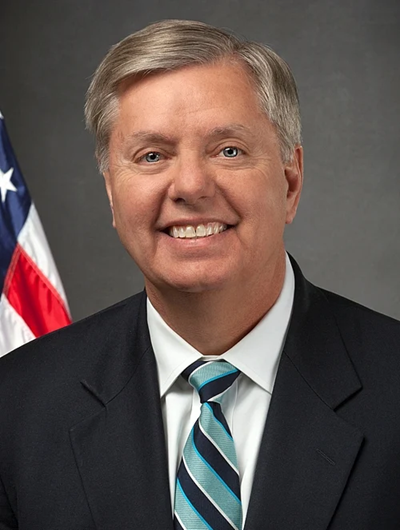
Lindsey Graham (1955 – 2026)

A trail of death and destruction

Lindsey Graham (1955–2026), a U.S. Representative (1995–2003) and Senator (2003–2026) from South Carolina, was one of the most consistently hawkish/interventionist figures in Congress on foreign policy.

As a veteran (U.S. Air Force JAG, including recall to active duty during the Gulf War era) and member of the “three amigos” group with John McCain and Joe Lieberman, he strongly backed an interventionist U.S. role abroad, especially post-9/11 in the Middle East and the broader War on Terror. He voted for key authorizations, supported funding/surges/continued presence, criticized withdrawals, and made public statements calling for robust military action.

A precise total count of “wars, conflicts, and excursions” is not straightforward—support can mean votes on authorizations/funding, public advocacy, or opposition to drawdowns. He backed the vast majority of major U.S. military engagements during his political career (particularly Middle East-focused ones), but he was skeptical of or opposed certain Clinton-era actions (e.g., aspects of the 1999 Kosovo intervention).

He supported at least 6–8 major ones (plus related operations, funding bills, and smaller actions like strikes or anti-ISIS efforts). Here is a list of the primary ones, with dates, evidence of his support, and casualty comparisons (U.S. military deaths vs. estimates of other deaths—enemy combatants + civilians). Casualty figures are from U.S. government/DoD data where available for U.S. deaths and widely cited studies/projects (e.g., Costs of War, Iraq Body Count, Wikipedia syntheses of estimates) for totals. Note that total (“other”) death estimates vary significantly by methodology (documented vs. statistical/excess mortality) and often include indirect deaths; ranges are provided.

  1. Gulf War / Operation Desert Storm (1990–1991)
  • Graham’s support: Recalled to active duty as an Air Force JAG lawyer (stateside at McEntire ANG Base); prepared deploying pilots on laws of war. As a military veteran and later conservative politician, he aligned with support for the U.S.-led coalition effort to expel Iraq from Kuwait.
  • Casualties: U.S. military deaths ≈ 383 total (148 battle/hostile deaths; rest non-hostile accidents). Other deaths (primarily Iraqi military + civilians): Estimates range from ~20,000–50,000+ Iraqi military killed in combat/air campaign + ground phase, plus ~3,500+ direct civilian deaths; broader totals (including 1991 uprisings) cited up to 100,000–200,000+ in some analyses.
  1. War in Afghanistan / Operation Enduring Freedom (2001–2021)
  • Graham’s support: Voted for the 2001 Authorization for Use of Military Force (AUMF) as a House member; strongly advocated continued U.S. presence, training Afghan forces, and opposed rapid withdrawals (including Biden’s 2021 pullout, which he called a “disaster”). He supported surges/strategy adjustments.
  • Casualties: U.S. military deaths ≈ 2,420–2,460. Total deaths (direct violence): Estimates 176,000–212,000+ overall (including ~46,000 civilians, 66,000–92,000 Afghan security forces, Taliban/opposition fighters, and coalition allies).
  1. Iraq War / Operation Iraqi Freedom (2003 invasion + occupation/operations into the 2010s)
  • Graham’s support: Voted for the 2002 Iraq AUMF; strongly supported the invasion, the 2007 “surge,” ongoing funding, and criticized calls for withdrawal. He traveled to Iraq multiple times and defended the mission.
  • Casualties: U.S. military deaths ≈ 4,431–4,500 total. Total Iraqi deaths: Highly variable estimates—documented civilian violent deaths ~187,000–211,000 (Iraq Body Count project); broader excess/violent death estimates from ~100,000+ (early years) to 600,000+ (e.g., 2006 Lancet study for 2003–2006 period). Total violent deaths often cited in the hundreds of thousands.
  1. 2011 NATO-led military intervention in Libya (no-fly zone + strikes to oust Gaddafi)
  • Graham’s support: Early and vocal advocate for a no-fly zone and robust action; called to “cut the head of the snake off” by targeting Gaddafi’s inner circle and supported arming rebels.
  • Casualties: U.S. military deaths: Minimal/none in direct combat (U.S. participated in initial phases with low overall coalition combat losses). Libyan deaths (2011 conflict): Estimates 15,000–30,000 total (combatants on both sides + civilians); some post-war Libyan government figures lower (~10,000 range); NATO airstrikes linked to at least 72 confirmed civilian deaths in specific investigations.
  1. U.S.-led campaign against ISIS (Operation Inherent Resolve) in Iraq and Syria (2014 onward, major combat phase through late 2010s)
  • Graham’s support: Supported airstrikes, U.S. presence, and operations to defeat ISIS; criticized insufficient or limited responses and advocated stronger action.
  • Casualties: U.S. military deaths: Low (dozens across the broader campaign). Total deaths in context: Part of Syrian civil war (~500,000–650,000+ total deaths since 2011 across all parties) + Iraqi operations. ISIS killed tens of thousands; coalition airstrikes caused thousands of civilian deaths (estimates vary, e.g., thousands per monitoring groups like Airwars).
  1. U.S. strikes and involvement in Syria (various phases, e.g., 2017–2018 chemical weapons strikes on Assad regime, ongoing anti-ISIS/Kurd support)
  • Graham’s support: Supported targeted strikes on Assad (e.g., 2018); advocated more robust strategy against regime, Russia, and Iran influence while backing anti-ISIS efforts.
  • Casualties: U.S. deaths: Very low. Overlaps with ISIS/Syrian civil war totals above (hundreds of thousands overall in Syria).
  1. U.S./Israeli military actions against Iran (recent conflict phase, ~2025–2026, including strikes/“Operation Epic Fury”)
  • Graham’s support: Longtime advocate for pressure/regime change; strongly supported strikes, military action, and related efforts (public statements praising operations and calling for sustained action).
  • Casualties: U.S. deaths: Likely very low or none in direct combat (airstrikes/support role). Other deaths: Reports of over 7,300 killed in the conflict (including civilians; specific breakdowns vary by source).

Additional notes:

  • Graham also supported related efforts like Saudi-led operations in Yemen (with U.S. logistical/support role) and aid packages (e.g., to Ukraine, Israel), but these were not direct large-scale U.S. troop combat wars.
  • Smaller “excursions” (e.g., specific drone strikes, anti-al-Qaeda operations, or funding for ongoing presence) number in the dozens over his career and generally had low U.S. casualties but contributed to broader tallies.
  • He opposed or was cautious about some earlier interventions (e.g., elements of Kosovo 1999 under Clinton).

Overall, Graham supported the large majority of significant U.S. military actions in his era as a leading interventionist voice. The listed conflicts involved thousands of U.S. deaths (mostly in Afghanistan and Iraq) versus far higher totals for local populations (often tens or hundreds of thousands per conflict, with wide estimate ranges). These figures reflect the human cost of prolonged engagements; exact “other people” numbers remain debated due to incomplete records, differing definitions (combatants vs. civilians), and indirect effects.

Sources for positions include Graham’s Senate statements, congressional records, and reporting on his votes/advocacy. Casualty data draws from DoD summaries, Costs of War Project, Iraq Body Count, and peer-reviewed/monitoring estimates.

Ranked list of the major conflicts Lindsey Graham supported (as detailed in the prior response), ordered by approximate scale of total deaths (all parties combined: U.S. military + local combatants + civilians). Wounded figures are included where available, though they are generally less precisely documented than deaths—especially for non-U.S. sides.

Figures are estimates drawn from U.S. Department of Defense data (for U.S. casualties), Costs of War Project, Iraq Body Count, monitoring organizations, and historical analyses. Totals for “other” deaths/wounded vary widely due to methodology (documented vs. statistical estimates), inclusion of indirect effects, and fog of war. Ranges reflect this uncertainty. Overlaps exist (e.g., anti-ISIS operations in Iraq/Syria). Recent conflicts (e.g., Iran) have preliminary data as of mid-2026.

Ranked by Estimated Total Deaths (Highest to Lowest)

  1. Iraq War (2003 invasion + subsequent operations)
    • Total deaths (all parties): Hundreds of thousands (documented civilian violent deaths ~187,000–211,000; broader excess/violent death estimates 100,000–600,000+ in early years).
    • U.S. deaths: ~4,431–4,500 total.
    • Wounded: U.S. ~31,994–32,000+; total/other (Iraqi) estimates in the hundreds of thousands (precise figures limited).
    • Notes: Highest direct U.S. involvement and casualties among the list.
  2. Syria involvement / Anti-ISIS campaign (2014 onward, including strikes)
    • Total deaths (all parties, broader Syrian civil war context): ~500,000–650,000+ (full civil war since 2011; ISIS-specific and coalition actions contributed significantly).
    • U.S. deaths: Low (dozens across the campaign).
    • Wounded: U.S. low (hundreds or fewer reported); total/other in the civil war context: hundreds of thousands. Coalition airstrikes linked to thousands of civilian deaths/wounded in some tallies.
    • Notes: U.S. role was primarily airstrikes, special operations, and support against ISIS (not the full civil war). Overlaps with Iraq operations.
  3. War in Afghanistan (2001–2021)
    • Total deaths (all parties): 176,000–212,000+ direct violence (including ~46,000 civilians, Afghan forces, Taliban/opposition).
    • U.S. deaths: ~2,420–2,460.
    • Wounded: U.S. ~20,000–23,500+; total/other significantly higher (tens to hundreds of thousands including local forces and civilians).
    • Notes: Long-duration conflict with substantial U.S. ground presence.
  4. Gulf War / Operation Desert Storm (1990–1991)
    • Total deaths (all parties): Tens of thousands (Iraqi military ~20,000–50,000+ killed; broader estimates up to ~100,000+ including civilians and uprisings).
    • U.S. deaths: 148 battle deaths).
    • Wounded: U.S./coalition ~467–776 (U.S. portion hundreds); Iraqi ~75,000+.
    • Notes: Short, high-intensity conventional war with one-sided casualty ratios.
  5. 2011 NATO-led intervention in Libya
    • Total deaths (all parties): 10,000–30,000 (combatants + civilians during 2011 phase).
    • U.S. deaths: Minimal to none in direct combat.
    • Wounded: Limited data; NATO airstrikes linked to dozens of confirmed civilian deaths (e.g., at least 72 in investigated strikes); broader Libyan estimates in the thousands.
    • Notes: Primarily air campaign with U.S. support for no-fly zone and strikes.
  6. U.S./Israeli military actions against Iran (~2025–2026, e.g., Operation Epic Fury and related strikes)
    • Total deaths (all parties): Over 7,300 reported (preliminary; includes civilians).
    • U.S. deaths: At least 13 (reports as of early-mid 2026).
    • Wounded: U.S. ~200–232+; total/other likely thousands (specific breakdowns emerging).
    • Notes: Airstrikes and support role; data still developing as of July 2026.

Summary of Scale

  • Highest overall human cost (deaths + wounded): Iraq and Afghanistan wars, followed by the broader Syria/ISIS context. These involved prolonged U.S. ground presence or heavy operations.
  • Lower scale: Gulf War (intense but brief), Libya (air-focused), and the recent Iran conflict (ongoing/preliminary figures).
  • U.S. casualties were a small fraction of total deaths/wounded in every case except the most asymmetric early phases.
  • Wounded often outnumber deaths by ratios of 3:1 or higher in modern conflicts, but non-U.S. wounded data is frequently incomplete.

These rankings reflect the cumulative human toll associated with each conflict. Graham’s support (via votes, statements, and advocacy) aligned with most of these, particularly the higher-cost, longer-duration ones in the Middle East and War on Terror. Figures can shift with new data or different counting methods (e.g., direct violence vs. indirect deaths from infrastructure collapse).

Lindsey Graham (R-SC) was one of the most consistent and vocal Republican supporters of U.S. assistance to Ukraine throughout Russia’s full-scale invasion that began in February 2022. As a longtime foreign policy hawk and member of the Senate Armed Services Committee, he viewed support for Ukraine as aligned with U.S. strategic interests: weakening Russia (a key adversary), bolstering European security and NATO’s eastern flank, advancing democracy, and benefiting the American defense industry.

He frequently crossed party lines on this issue, worked with Democrats, and maintained strong advocacy even as some Republicans grew skeptical of open-ended aid—especially after Donald Trump’s influence grew in the GOP.

Early Advocacy (2022 Onward)

In May 2022, Graham published an op-ed titled “Why I support a Ukraine aid package before it’s too late.” He backed the roughly $40 billion supplemental that included weapons, economic support, and humanitarian aid. Key arguments included:

  • Ukrainian victory over Russia would be “a victory for democracy itself.”
  • Providing advanced weapons keeps the U.S. defense industrial base running and creates American jobs.
  • Delaying aid risked a longer, costlier conflict.

He consistently pushed for “state-of-the-art weapons” to help Ukraine “finish the job” against Russian invaders.

Key Votes on Aid Packages

Graham supported major bipartisan supplemental aid bills:

  • In April 2024, he voted in favor of the House-passed national security supplemental providing aid to Ukraine, Israel, and Taiwan. The package included military assistance, allowed seizure of some Russian sovereign assets, and converted portions of aid into loans (reducing the direct burden on U.S. taxpayers). It passed the Senate with strong bipartisan support.

He also backed earlier emergency supplementals (FY2022–FY2024) that collectively appropriated nearly $174 billion in total U.S. support for Ukraine-related efforts (security, economic, and humanitarian), with significant portions for direct military aid.

Sanctions and Pressure on Russia

Graham was a leading voice for aggressive sanctions:

  • He co-led (with Sen. Richard Blumenthal, D-CT) bipartisan legislation for nearly two years targeting Russia’s economy.
  • In his final days (July 2026), during a visit to Kyiv, he announced that the Trump White House had agreed to support a revised version of the sanctions bill. It aimed to cripple Moscow’s war economy, impose tariffs on countries (e.g., China) buying Russian oil, and give President Trump additional tools to pressure Russia toward negotiations. Graham described it as providing “the formula to end this war.”

He urged China to use its influence on Putin and supported making Russia a state sponsor of terrorism designation (partly over the abduction of Ukrainian children).

Multiple Visits to Ukraine

Graham visited Ukraine approximately 10 times during the war (according to President Volodymyr Zelenskyy). His trips often included meetings with Zelenskyy, inspections of Ukrainian capabilities, and public calls for more U.S. support.

Notable recent activity:

  • In his last public trip (around July 10–11, 2026), he met Zelenskyy in Kyiv, toured a Ukrainian drone factory (SkyFall), praised Ukraine’s drone technology (e.g., Vampire bombers and Shrike FPV models), and urged deeper U.S.-Ukraine partnership on drones.
  • He emphasized making Ukraine “more lethal,” strengthening air defenses, and combining military aid with sanctions and diplomacy.
  • In final remarks from Kyiv, he expressed optimism: “I’ve never been more optimistic than I am today that we have the formula to end this war… help Ukraine be more lethal… find the off-ramp not to humiliate Putin but to end this war so that Ukraine will thrive and survive.”

Warnings and Strategic Views

Graham repeatedly warned against pausing or reducing U.S. aid, arguing it could lead to disastrous outcomes for Ukraine (comparing risks to the Afghanistan withdrawal). He advocated a long-term approach focused on Ukrainian self-reliance through advanced weapons, training, and industrial cooperation rather than indefinite U.S. blank checks.

He sometimes linked Ukraine aid to other priorities (e.g., border security in earlier negotiations) but ultimately supported the packages when they advanced.

Relationship with Trump and Later Years

As a close Trump ally in his later years, Graham worked to align Ukraine policy with the Trump administration—particularly by securing White House buy-in for revised sanctions legislation that empowered the president. While some reports noted occasional tactical shifts to accommodate Trump’s preferences on timing or conditions, Graham remained a steadfast advocate for robust support.

Legacy and Tributes

Graham died on July 11/12, 2026, shortly after returning from his final Ukraine trip. Tributes from Ukrainian and NATO leaders highlighted his role:

  • Zelenskyy: Praised him as a “true defender of freedom” who visited “when it was most needed.”
  • NATO allies (e.g., Estonia, Latvia): Called him a “steadfast friend,” strong supporter of NATO’s eastern flank, and unwavering advocate for assistance to Ukraine against Russian aggression.
  • He was remembered as a champion of trans-Atlantic ties and consistent voice for aiding Ukraine.

In summary, Graham’s support for Ukraine was long-standing, bipartisan where possible, and focused on lethal aid, sanctions, and strategic pressure on Russia. He saw it as essential to U.S. and allied security. His final actions—securing sanctions progress and visiting Kyiv—underscored his commitment until the end.

Lindsey Graham (1955–2026) was one of the strongest and most consistent supporters of Israel in the U.S. Senate. His advocacy spanned decades and included legislative action, public statements, personal relationships with Israeli leaders, and alignment with pro-Israel causes.

Detailed breakdown of his support, categorized as professional (legislative/public roles), personal (visits, relationships, private advocacy), and private (campaign finance and behind-the-scenes elements). This draws from his Senate record, statements, visits, and tributes following his death in July 2026.

Professional Support (Legislative and Public Advocacy)

As a Senator (especially on the Armed Services and Appropriations Committees), Graham consistently backed U.S. military, economic, and diplomatic support for Israel:

  • Aid Packages and Funding:
    • Voted in favor of the April 2024 national security supplemental appropriations bill, which included significant military aid to Israel (alongside Ukraine and Taiwan). He described it as “necessary and vital aid” and highlighted its timing during Passover celebrations. He supported provisions allowing seizure of Russian assets and converting some aid into loans.
    • Supported earlier Israel Security Supplemental Appropriations measures and National Defense Authorization Act (NDAA) provisions related to Israel (e.g., security assistance and policy matters).
    • Advocated for unrestricted weapons transfers, including bombs and advanced systems, stating Israel should receive “the bombs they need to end the war” and could not afford to lose.
  • Military and Technological Partnership:
    • Pushed for joint U.S.-Israel weapons development, describing it as a potential “21st century ‘Manhattan Project’” for mutual security benefits (sharing technology and enhancing both nations’ capabilities).
    • Supported accelerating aspects of Israel’s military self-reliance while fiercely opposing any reduction or phase-out of U.S. aid. In private conversations (later recounted by Netanyahu), he reacted strongly against suggestions of ending U.S. military funding, insisting it must continue.
  • Positions on Conflicts and Threats:
    • Strongly backed Israel’s right to defend itself after the October 7, 2023, Hamas attacks. Urged decisive victory: “Enough already. Destroy Hamas. Do to Hamas what we did to the Germans and the Japanese during World War II. Annihilate them and rebuild the Palestinian society like we did with Germany and Japan.”
    • Championed U.S. and joint U.S.-Israeli military actions against Iran (including 2025–2026 strikes), viewing Iran’s nuclear program and proxies (Hamas, Hezbollah) as existential threats to Israel. He was a prominent advocate in Washington for these operations.
    • Pushed for sanctions on Iran and its supporters; advocated Israel-Saudi normalization as a potential “big prize” outcome of actions against Iran.
    • Opposed any U.S. pauses or conditions on aid (e.g., over Rafah operations) and criticized efforts to withhold weapons.
  • Resolutions and Broader Policy:
    • Supported resolutions affirming Hamas cannot retain control in Gaza and other pro-Israel measures.
    • Consistently framed U.S. support for Israel as a strategic investment that strengthens the IDF, shares technology, and advances U.S. interests.

Personal Support (Visits, Relationships, and Direct Engagement)

Graham maintained close personal ties and demonstrated commitment through direct engagement:

  • Visits to Israel: He made multiple trips to Israel over the years, meeting with officials, inspecting security situations, and publicly reaffirming the alliance. These visits underscored his hands-on interest in the Middle East.
  • Relationship with Israeli Leaders:
    • Had a particularly close personal relationship with Prime Minister Benjamin Netanyahu. Netanyahu called him “a great friend of Israel,” “a cherished friend of mine,” and “one of the great champions of the American-Israeli alliance.” He described Graham as understanding that “the security of Israel and the United States is inseparable.”
    • In their last conversation (before Graham’s death), Netanyahu discussed phasing out U.S. aid; Graham strongly opposed it and threatened to rally Senate support to maintain it.
  • Public and Private Advocacy: He frequently spoke of the U.S.-Israel alliance in personal terms, linking it to shared values and security. Even as wars in Gaza and Iran eroded broader American support, Graham remained a steadfast champion.

Private Support (Campaign Finance and Behind-the-Scenes)

Public records show alignment through political funding networks (private donor support for his pro-Israel positions):

  • Campaign Contributions: Graham received substantial support from pro-Israel groups and PACs. Over $1 million in total documented contributions from pro-Israel interest groups, including significant amounts from the American Israel Public Affairs Committee (AIPAC) and the Republican Jewish Coalition (which funneled over $1 million in at least one cycle to support his campaigns).
  • Behind-the-Scenes/Private Conversations: His private discussions with Netanyahu (e.g., passionately defending continued aid) reflect personal conviction beyond public roles. He consistently tied Israel’s security to America’s in private settings as well.
  • Philanthropy: Public records do not highlight major standalone personal charitable donations to Israeli causes outside political channels. His support was primarily expressed through political advocacy and legislative work rather than documented private philanthropy.

Summary and Legacy

Graham’s support for Israel was unwavering across his career. He viewed the U.S.-Israel relationship as a strategic partnership and moral imperative, consistently advocating for robust military aid, technological collaboration, decisive action against threats (Hamas, Iran), and diplomatic initiatives like normalization.

Following his death in July 2026, Israeli Prime Minister Netanyahu and pro-Israel organizations (e.g., StandWithUs) paid tribute to him as “a steadfast friend of Israel and the Jewish people” who “never wavered” in support for Israel’s right to defend itself and the U.S.-Israel alliance.

His record combined legislative muscle, personal diplomacy, and alignment with pro-Israel networks, making him one of Israel’s most reliable advocates in the U.S. Senate.

Lindsey Graham received approximately $999,580 to $1 million+ in tracked campaign contributions from pro-Israel interest groups over his career (roughly 1990–2024), according to aggregated OpenSecrets data.

This is the most reliable public figure available for contributions categorized under the “Pro-Israel” industry. It primarily reflects donations from pro-Israel PACs, affiliated individuals, and groups like the American Israel Public Affairs Committee (AIPAC) and the Republican Jewish Coalition (RJC). These are campaign-related funds, not personal or private gifts.

Breakdown of Pro-Israel Organizational Support (Campaign Contributions)

  • Total from Pro-Israel groups (1990–2024): $999,580 (OpenSecrets aggregate for U.S. Senators). Multiple sources round this to “over $1 million.”
    • This includes direct PAC contributions and bundled/affiliated individual donations tied to pro-Israel networks.
  • Notable examples by group/cycle:
    • AIPAC and affiliates: Significant portions; one period showed ~$444,997 from the American Israel Public Affairs Cmte alone.
    • Republican Jewish Coalition (RJC): Funneled over $1 million in support during the 2020 cycle alone (including through super PACs and direct channels). This was one of the largest single sources for him in that race.
    • 2019–2020 cycle alone: $459,665 from pro-Israel sources.
  • Additional context: Wealthy pro-Israel individuals (often overlapping with organizational networks) have directed large sums via super PACs supporting Graham, such as Sheldon Adelson/Miriam Adelson, Larry Mizel, and Sam Fox (hundreds of thousands in various cycles).

Personally / Privately Received Money

There is no publicly available aggregated figure for large personal or private (non-campaign) gifts from pro-Israel organizations or individuals to Graham personally.

  • U.S. Senators are subject to strict ethics rules on gifts. Personal gifts above nominal amounts (typically $50–$250 depending on source) must generally be disclosed, returned, or declined. No major personal gifts or private transfers from pro-Israel sources appear in public records.
  • Support from pro-Israel individuals (e.g., Adelson family, Mizel) has primarily flowed through campaign channels (direct contributions or super PACs), which are already captured in the ~$1 million figure above.
  • No evidence or reports of substantial direct personal donations, endowments, or private funding outside campaign finance.

Summary

Category Amount Notes
From Pro-Israel organizations/groups (campaign) ~$999,580 – $1M+ (1990–2024) OpenSecrets aggregate; includes AIPAC, RJC, affiliated PACs/individuals. Major in 2020 cycle.
Personally/Privately (non-campaign gifts) No significant public total Ethics rules limit this; support is overwhelmingly campaign-based.
Context Part of much larger total fundraising Graham’s campaigns raised $50M+ in peak cycles from all sources.

These numbers come primarily from OpenSecrets (nonpartisan campaign finance tracker using FEC data) and consistent reporting across sources. Comprehensive “lifetime” private/personal data beyond campaign finance is not centrally tracked or disclosed in the same way. For the most current or granular cycle-by-cycle details, OpenSecrets or FEC filings are the authoritative sources.

Lindsey Graham played a supportive but secondary role from Washington as a U.S. Senator, not an operational or on-the-ground leadership role, in the events surrounding Ukraine’s 2013–2014 Euromaidan (Maidan) protests and the ouster of President Viktor Yanukovych.

Background on the 2014 Events

The protests began in November 2013 after Yanukovych abruptly rejected an EU association agreement under Russian pressure. They escalated after police violence against demonstrators. In February 2014, amid deadly clashes, parliament voted to remove Yanukovych (who then fled to Russia). Russia and some critics described this as a Western-backed “coup.” Many in the West viewed it as a popular uprising against corruption and for European integration. The new interim government faced immediate challenges, including Russia’s annexation of Crimea and conflict in Donbas.

Lindsey Graham’s Specific Role

Graham (then a Republican Senator from South Carolina) was a vocal critic of the Obama administration’s handling of the crisis and a strong backer of the protesters and the post-Yanukovych government. His actions included:

  • Public statements and criticism: He criticized the Obama administration for being too slow or weak in responding to the protests and Yanukovych’s crackdown. In early 2014, he argued the crisis showed Obama’s foreign policy failures and pushed for stronger U.S. support for Ukraine’s “just cause.”
  • Support for the opposition and new government: He backed the protesters’ demands and, after Yanukovych’s removal, advocated for U.S. military aid, sanctions on Russia, and recognition of the new Ukrainian authorities.
  • Later advocacy (2014 onward): He co-sponsored or supported legislation for sanctions on Russia and arms to Ukraine. In September 2014, he commented on the Russia-Ukraine ceasefire, arguing sanctions were key to pressuring Moscow.

Collaboration with John McCain

Graham worked closely with Senator John McCain on Ukraine policy. They were longtime foreign policy allies (part of the informal “three amigos” group with Joe Lieberman earlier).

  • McCain visited Kyiv in December 2013 during the protests and addressed crowds on Maidan Square, declaring: “We are here to support your just cause, the sovereign right of Ukraine to determine its own destiny freely and independently. And the destiny you seek lies in Europe.”
  • Graham and McCain issued joint statements and pushed together for stronger U.S. action against Russia and support for Ukraine. They collaborated on legislation and criticism of Obama’s response.
  • Their partnership continued after 2014, with joint visits to Ukraine (e.g., later trips to the front lines) and advocacy for arming Ukraine.

Connection to Victoria Nuland

There was alignment and support. Victoria Nuland (U.S. Assistant Secretary of State for European and Eurasian Affairs) was the lead U.S. diplomat on the ground during the crisis. She was deeply involved in negotiations for a political transition, met with opposition leaders, and was central to U.S. efforts to shape a post-Yanukovych government (famously caught on a leaked call discussing preferred Ukrainian leaders).

  • McCain and Graham publicly supported Nuland’s tough stance on Russia and her confirmation in 2013.
  • They “stuck their necks out” for her nomination amid expected pushback, viewing her as aligned with a more assertive policy toward Moscow.
  • Graham backed the broader diplomatic efforts Nuland led, which included U.S. support for a new government more oriented toward Europe.

Summary of Graham’s Involvement

Graham acted as a hawkish congressional supporter of the Maidan movement and the resulting government change. He amplified calls for U.S. backing of the protesters, criticized Yanukovych and Russia, and worked closely with John McCain and supported diplomat Victoria Nuland’s efforts. His role was rhetorical, legislative, and pressure-oriented from Washington—not operational or on-the-ground like McCain’s visit or Nuland’s diplomacy.

Direct U.S. “plot” to replace the government often cite Nuland’s activities, U.S. democracy-promotion funding (including Soros-linked groups), and Western diplomatic support. Graham was part of the broader bipartisan congressional chorus favoring a pro-Western shift in Ukraine but was not a central architect or coordinator of any such effort. His positions aligned with traditional Republican foreign policy hawks who saw the events as an opportunity to counter Russian influence.



Phase V to Phase VI Transition: The Financialists’ All Or Nothing Civil Wars to Prevent ARC

Image

Phase V to Phase VI Transition: The Financialists’ All Or Nothing Civil Wars to Prevent ARC

The Financialists—bloodline heirs to ancient Roman elite scum—are dead-set on shattering the United States via their Praetorian Regime and Devil’s Legions. Why? To crush any US-Russia-China alliance that would gut their global stranglehold and restore a world order free from their parasitic grip.

Core Truths

  • These Financialists are a ruthless chain of money-lords who’ve weaponized economic sabotage to topple empires, tracing from Venetian merchant bankers who rigged the Crusades to crush rivals, through Amsterdam’s trading nets that engineered Britain’s 1688 Glorious Revolution as a Dutch East India Company takeover. Now, they’re gunning for the US to block a powerhouse trio that could end their reign.
  • The Praetorian Regime runs double-barreled: ancient private banks, rooted in Roman and Venetian practices, fueling the rot in liberal democracies’ bureaucracies and post-WWII global outfits like the IMF, World Bank, and UN—masks for US-centric financial repression and elite wealth grabs.
  • It’s straight out of ancient Rome’s Praetorian playbook—elites hiding behind layers of owners and managers, knives to their throats, when rival powers threaten their grip, just as early Roman rivalries forced power to cloak itself.
  • Tools of the trade: Debt traps via unsustainable loans, stoked divisions through resentment and chaos, resource theft via wars and taxes, legal warfare (lawfare), and straight-up hits and assassinations. Pulled from Rome’s collapse by mercenary sackings, Britain’s overextension post-Revolution, America’s hundreds of trillions of unpayable debts and social obligations, and endless elite killings for profit.
  • Russia and China fought back hard in the 20th century, nearly wiping them out despite all-out destruction attempts. That ramps up the desperation—smash the US or die trying, resistance escalates the stakes for their survival, as there’s two models now for how to beat these fuckers.

Historical Roots

Financial elites have hammered societies with their seven-step Kill Chain: 1) Spot productive targets like Rome’s provinces or Britain’s colonies; 2) Infiltrate with agents and financial hooks, echoing Praetorian sway in Roman politics or Dutch alliances in Britain; 3) Debt-snare through mercenary dependencies or post-Revolution borrowing; 4) Bleed dry via wars, overthrows, and coups—like Roman assassinations or British colonial exploits through color revolutions; 5) Divide and conquer with ethnic manipulations and plots; 6) Trigger collapse, as in Rome’s sacking or Britain’s imperial drain; 7) Abandon the husk and jump to new hosts, like from Rome to Venice or Britain to Wall Street. In the US, it’s skyrocketing national debt, endless military spending, and cultural wars eroding unity—primed for civil war turning to fragmenting revolution.

Modern Machinery

The Praetorian Regime’s twin pillars lock in control worldwide: The private banking underbelly controls liquidity to ensnare nations, backing bureaucratic bloat in democracies and international bodies set up post-Bretton Woods for elite enrichment. Devil’s Legions—self-funded shadow ops of spies, crooks, terrorists, and power brokers like J. Edgar Hoover, the Dulles Brothers, and Meyer Lansky—enforce it all, with assassination as the ultimate hammer, from targeted killings like General Patton’s as a warning to deter system challengers.

Geopolitical Do-or-Die

A US-Russia-China bloc is their nightmare, like the rivals that sacked Rome—Russia’s leadership rejecting Roman-influenced integration, China’s defiance of predatory finance. Add a cohesive US having finally finished the revolution, and it’s an unmatched coalition dismantling centuries of debt-based empire on terms that bury the elites.

Fragmentation Playbook

Flood with forced migration to spark ethnic hatred and exploitable backlashes. Hollow the economy via perpetual wars that expend productive populations, recollateralize banks, and drain treasure. Ignite cultural rifts via “Mob States” and identity chaos to fuel civil war, revolution, and total breakup. Offshore “Spider’s Web” networks of private armies and hidden wealth enable asset seizures, as in Venezuela’s fraudulent takeovers. Underpinning it: Matrilineal dynasties pushing “unhealthy matriarchy” ideologies, fueling an Eternal War between individual freedom and forced collectivism—twisting understandings in neuroscience, entrepreneurship, and special forces insights on human dynamics.

These Financialists trace back to Rome’s dark alleys, honed in Venice’s counting houses where debt manipulation framed religious wars, Dutch trades that hijacked crowns, British colonial finance that bled empires dry, and now Wall Street’s global scale that’s stolen what remains of the Commons. They slaughter with ledgers, not legions, knives in an elites child’s throat, not armies. The Praetorian Regime echoes Rome’s Guard—bodyguards turned kingmakers through corruption and kills—now invisible, turning sovereign states into debtors under democracy’s guise.

Global adaptability shines: Brussel’s bureaucratic tangles as a testing ground, India’s potential as a new Praetorian hub for elite control.

Bottom line, this Sunday morning: Financialists are all-in on breaking America to dodge a sovereign-led global reset that buries their Roman ghost and favors real powers over predators. WWII’s financial restructurings—shifting empires—and today’s tensions scream the ancient pattern of subversion. Fight back with national resolve: Expose the invisible handlers, neutralize the domains, break the Kill Chain once and for all. Revolution, if needed, must prioritize that—or we fall.

Hold the line like Russia and China did, remembering who we are. We’re neither Romans nor their British constructs. We’re Americans, proud descendants and last keepers of English Civilization. Hold the fucking line! For ARC must stand and hold, or the world devolves into four centuries of consuming conflicts and wars.

By  EM Burlingame – 蒲 奕 言 | @EMBurlingame

 Source: https://x.com/EMBurlingame/status/2015441653503594846?s=20


Key Citations

The International Organizations Immunities Act (IOIA)

Trillions hidden offshore:

…a majority (around 63%) of offshore wealth remains unexposed by mechanisms like the Common Reporting Standard (CRS), meaning significant portions still evade detection.


From Grok on January 20, 2026

The International Organizations Immunities Act (IOIA) is a United States federal law enacted by the 79th Congress and signed into law on December 29, 1945 (Public Law 79-291, codified primarily at 22 U.S.C. §§ 288 et seq.).

Historical Context and Purpose

The Act was passed in the immediate aftermath of World War II, during a period when the United States was actively participating in the creation and support of new public international organizations (most notably the United Nations, which was established in 1945, along with bodies like the Food and Agriculture Organization, International Labor Organization, and others). Its primary purpose was to facilitate the work of these organizations by granting them and their personnel certain privileges, exemptions, and immunities within the United States. This ensured they could operate independently, without interference from U.S. taxes, legal processes, or administrative burdens, similar to the protections traditionally afforded to foreign governments and diplomats at the time. Without such protections, international organizations headquartered or operating in the U.S. (e.g., the UN in New York) could face practical obstacles like taxation, lawsuits, or seizures that might hinder their global missions.

Key Provisions

The Act defines an “international organization” as a public international body in which the United States participates (via treaty, congressional act, or appropriation) and that has been designated by the President through an Executive Order as entitled to the Act’s benefits. Major immunities and privileges granted to designated international organizations include:

  • Immunity from suit and judicial process — The organization, its property, and assets enjoy the same immunity from lawsuits and legal proceedings as foreign governments (with the ability to expressly waive this immunity).
  • Inviolability of archives and immunity from search or confiscation of property and assets (unless waived).
  • Exemptions related to customs duties, internal revenue taxes on imports, registration as foreign agents, and treatment of official communications (matching those given to foreign governments).
  • Tax exemptions for the organization itself.

For officers, employees, and representatives (and often their families):

  • Exemptions from U.S. income taxes on salaries paid by the organization.
  • Immunity from legal process for official acts.
  • Certain immigration and entry privileges.

These benefits are not full diplomatic immunity in all cases (e.g., they are more limited for U.S. citizens working for such organizations), and they can be conditioned, limited, withheld, or revoked by the President (or in some cases the Secretary of State) if there’s abuse or other justification. Important Developments and Interpretation When enacted in 1945, foreign governments generally enjoyed absolute sovereign immunity in U.S. courts. The IOIA thus initially provided international organizations with similarly broad (near-absolute) protection. However, U.S. law evolved with the Foreign Sovereign Immunities Act (FSIA) of 1976, which adopted a restrictive theory of immunity — foreign governments can now be sued in U.S. courts for commercial activities and certain other exceptions. A significant U.S. Supreme Court decision in 2019 (Jam v. International Finance Corporation) clarified that the IOIA’s reference to immunity “as is enjoyed by foreign governments” is dynamic — it incorporates the current (restrictive) standard under the FSIA, rather than the absolute immunity of 1945. This means international organizations can be sued for commercial activities in many cases, unless they qualify for other exemptions. Today, the IOIA continues to apply to dozens of designated organizations (via various Executive Orders), enabling the smooth functioning of entities like the UN, World Bank affiliates, and other multilateral bodies in the United States.

Continue reading

Powers & Principalities: Episode 433 by Our Interesting Times

Powers & Principalities: Episode 433 by Our Interesting Times  (January 3, 2026)

Powers & Principalities: Episode 433 by Our Interesting Times

EPISODE DESCRIPTION: Trump Nabs Maduro, More Somali Fraud & Jewish Presidents

Trump Nabs Maduro, More Somali Fraud & Jewish Presidents

Powers and Principalities is a long-running podcast series co-hosted by Tim Kelly and Joseph Atwill. It forms part of Tim Kelly’s broader podcast, Our Interesting Times, and focuses on in-depth discussions of historical revisionism, deep state influences, psychological operations, media manipulation, and critiques of establishment narratives.

Tim Kelly (full name Timothy Kelly) is an independent podcaster best known as the host of Our Interesting Times, a long-running show focused on alternative perspectives on history, politics, power structures, and critiques of mainstream narratives. Background and Personal Life Tim Kelly keeps a relatively low public profile regarding his personal biography. From interviews and descriptions:

  • He is a traditional Catholic, married, and father to 7 children.
  • He describes himself primarily through his work as a researcher and commentator on “interesting” (often hidden or revisionist) aspects of current and historical events.

Podcasting Work

  • Our Interesting Times (launched around 2015): His flagship podcast, hosted on Podomatic (tkelly6785757.podomatic.com), with nearly 1,000 episodes as of early 2026. It features in-depth interviews with authors, researchers, and thinkers on topics like historical revisionism, deep politics, media manipulation, and cultural engineering.
    • Frequent guests include E. Michael Jones, James Perloff, Donald Jeffries, and many others discussing subjects such as World War II myths, technocracy, oligarchic influence, and psychological operations.
  • Powers & Principalities: A recurring series (hundreds of episodes) co-hosted with Joseph Atwill (author of Caesar’s Messiah). These are often guest-free discussions delving into conspiracy-related themes, CIA influence in media/politics, Frankfurt School critiques, and current events through a lens of elite control and psyops.

Joseph Atwill (often called Joe Atwill) is an American independent scholar and author best known for his highly controversial thesis on the origins of Christianity.

Background: Atwill spent part of his youth in Japan, attending St. Mary’s International School, a Jesuit-run military academy where he studied Greek, Latin, and the Bible. He later studied computer science in college and co-founded several software companies before shifting focus to biblical and historical research around 1995.

After college (where he studied computer science), he co-founded software companies in the 1980s, including Ferguson Tool Company (with early IBM programmer David Ferguson) and Amalgamated Software of North America (ASNA). Around 1995, he sold his shares and exited the industry, providing the financial independence to pursue full-time independent research on biblical studies and history.


Mentioned by Joe Atwill in this podcast:  Holocaust Encyclopedia


All roads lead to the City of London…  TRUMP KIDNAPS MADURO! TOM LUONGO EXPOSES THE REASONS WHY!

Why did Trump kidnap Maduro? Oil, minerals, drugs, voting machines, or was it something even darker that the MSM won’t even mention? Was this an assault on the City of London? Tom Luongo lays it all out.

Tom Luongo exposes what’s really going on with TRUMP & MADURO

The statement “You cannot have ethos without telos” captures a profound insight from ancient Greek philosophy, particularly Aristotle’s framework. Telos (τέλος) refers to the end, purpose, goal, or final cause of something—the inherent reason it exists or the ultimate aim it serves. Aristotle argued that everything in nature, human action, and society has a telos: an acorn’s telos is to become an oak tree; a knife’s is to cut effectively; a human life’s is eudaimonia (flourishing through virtuous activity).Ethos (ἦθος), in its original ethical sense (distinct from the modern rhetorical meaning of “credibility”), denotes character, moral habit, or the customary way of being that shapes virtuous behavior. It is the disposition formed by repeated actions aligned with excellence. Aristotle ties them inextricably in the Nicomachean Ethics: True ethos—good moral character—emerges only through actions directed toward the proper telos. Virtues (arete) are habits that enable us to fulfill our human purpose (rational, social flourishing). Without a guiding telos, actions lack direction, and character becomes aimless or malformed. You can’t cultivate genuine ethos (moral integrity) in a vacuum; it requires orientation toward an end worth pursuing. In modern terms:

  • Institutions (e.g., universities) falter when they lose a clear telos (truth-seeking vs. other agendas), eroding their ethical ethos.
  • Personal character similarly depends on purposeful living—drift without aim, and habits devolve into vice or emptiness.

The phrase isn’t a direct Aristotle quote but distills his teleological ethics: Character (ethos) is meaningless or impossible without purpose (telos). To build one is to pursue the other.

Uncommon Knowledge

by DAVID BROWN | CLEARNFO.com | December 13th, 2025

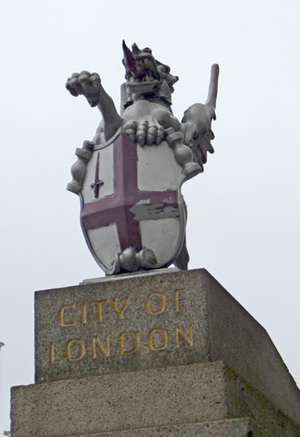
City of London boundary marker on approach to London Bridge

Uncommon knowledge: The Bolshevik Revolution of 1917 was aided and funded by the Anglo-American Establishment. This Revolution ushered in the soul-crushing godless Soviet Union. The Soviet Union died in 1991. Since that time over 30,000 churches have been built or restored. The Soviet Union is not Russia. Prior to the Bolshevik Revolution, Russia helped America during the American Revolution and during the US Civil War. Without Russia’s help, America wouldn’t exist today. The Anglo-American establishment are still butt-hurt over this. America’s most potent enemy is the City of London. Remember kids, “All roads lead to the City of London”. – ClearNFO

Russian Churches during the Soviet era vs. Putin:

During the Soviet era (1917–1991), the number of active Russian Orthodox churches plummeted due to widespread anti-religious campaigns, closures, demolitions, and repurposing. Pre-revolution figures indicate around 55,000 churches in 1917, which fell to fewer than 500 by 1940 in the Russian Republic alone, with many thousands destroyed or converted into secular facilities like warehouses or clubs.

Overall, estimates suggest over 47,000 churches were closed or destroyed across the era, reducing the total to about 7,000 functioning ones by 1991.

Some fluctuations occurred, such as partial reopenings during World War II (reaching around 22,000 by 1959) followed by further closures under Khrushchev, but the net impact was a massive suppression.

Since Vladimir Putin’s rise to power in 2000, the Russian Orthodox Church has experienced a significant revival, with state support facilitating construction and restoration. By around 2000, there were approximately 15,000–20,000 active churches or parishes.

From then until recent years, over 25,000 churches have been built or restored, often at a rate of 1,000 per year or more, bringing the total to more than 40,000 by the mid-2020s.


Related:

Crypto Rich ft Matt Ehret: How the British Empire Still Secretly Owns the World

Global Britain and King Charles’ Great Reset

The Long Defeat: The West Lost This Era’s Eighty Years War, Now the Sack

Image

EM Burlingame: Father | Author | Green Beret | Fin. & Intel. Analyst | Elec. & Comp. Eng. | The Eternal War | Modern Knight’s Guidebook | The Art of Being a Man

The Long Defeat: The West Lost This Era’s Eighty Years War, Now the Sack by EM Burlingame

The year 1945 is memorialized as the dawn of a new era of peace. The colossal effort of World War II, the story goes, culminated in the triumph of the free world and the establishment of a lasting order built on democratic ideals and international cooperation. This narrative is a profound and dangerous illusion.

The truth is that the peace of 1945 was not an end, but a transformation. It marked the beginning of a modern Eighty Years’ War, a protracted global conflict fought not just economically and ideologically, but with real bullets, coups, and endless proxy battles. For eight decades, the world has been a battlefield for Western hegemony, a period of non-stop wars, orchestrated conflicts, targeted assassinations, and sponsored violence spanning every continent.

This war, waged under the deceptive banner of a “rules-based international order,” has now concluded. The West, having systematically hollowed out its own spiritual, economic, and demographic foundations through this relentless imperial overstretch, has suffered a decisive and total defeat. The victors are clear: a resurgent China, a defiant Russia, and an ascendant Persian bloc, each having successfully resisted and outmaneuvered Western coercion.

In its decadent final state, reminiscent of the late Roman Empire, the West’s ruling class has chosen a final, desperate strategy: the replacement of its own exhausted native populations. This policy doesn’t seek victory; it merely invites the sack, orchestrated by modern Vandals, not this time white but brown, who arrive in both rags and suits, and who’ve already openly claimed the spoils of a civilization that’s nearly lost the will to survive.

The Cold War was not a mere standoff but the bloody opening phase of the West’s Long Defeat. While outwardly confronting Soviet communism, the Western elite engineered a perpetual state of low-intensity global conflict to enforce its will. From the coups in Iran and Guatemala in the 1950s to the brutal counter-insurgencies in Vietnam and Latin America, from the deliberate destabilization of the Middle East to the orchestrated chaos of the Arab Spring and the color revolutions, the eight decades since 1945 have been a single, continuous, eighty years, war for dominance.

This external aggression was matched by an internal cultural and economic revolution that proved more destructive than any foreign army. The establishment of a globalist financial system prioritized the fluid movement of capital over the health of national industries, gutting the Western middle class. Concurrently, a cultural vanguard promoted a corrosive hyper-individualism, attacking the pillars of traditional life—faith, family, and national identity. This dual assault, at home and abroad, severed the population from its historical continuity and drained its vital energies.

The most telling metric of this civilizational sickness is the demographic collapse. Native birth rates across the Western world have fallen catastrophically below replacement level, the ultimate biological signal of a people exhausted by endless foreign entanglements and a loss of purpose at home. The “rules-based order” was never designed for peace; it was the rhetorical cover for eighty years of war that ultimately broke the West’s spirit and its body.

While the West bled itself dry in its global imperial project, the nations of the East endured, adapted, and ultimately triumphed. They absorbed the pressure of Western aggression and subversion, learning to defend their sovereignty and civilizational coherence. China, the primary victor, transformed from a battered agrarian society into a peer superpower, maintaining an unapologetic emphasis on ethno-national solidarity. It harnessed state power to pursue long-term strategic goals, thinking in terms of centuries, not news cycles.

Russia, after the catastrophic experiment with Western-style liberalism in the 1990s, resurrected itself as a sovereign traditional power, decisively halting NATO’s eastward expansion and breaking the spell of Western unipolarity. Culminating in the outright final and total defeat of NATO in the trenches of Ukraine. Demonstrating psyops and lies don’t conquer a determined people, a people with a willingness to kill millions of young men to defend their lands and ways of life.

Persia (Iran), despite being subjected to decades of sanctions, assassination campaigns, and proxy wars, confidently expanded its influence across the Middle East, forming a strategic arc of resistance that effectively expelled Western power from the region. These powers observed the West’s technological prowess but wisely rejected its suicidal social prescriptions and its addiction to foreign intervention. They accepted globalization as a tool for their own ascendancy but insulated their people from its disintegrating effects. The result was inevitable.

A hollowed-out, deracinated West, addicted to foreign wars and domestic decadence, could not compete with disciplined, cohesive Eastern powers that believed in their own destiny. The era of Western-led regime change is over. The victors of our modern eighty-year war are Beijing, Moscow, and Tehran.

In its senescence, the contemporary West bears a chilling resemblance to the late Roman Empire. It is militarily exhausted from its endless campaigns, culturally decadent, and governed by an elite that’s alienated from the native population it purportedly leads. Faced with the economic stagnation and demographic winter caused by its own policies, this ruling class has settled on a desperate and cynical solution: demographic replacement. Mass immigration from the developing world is framed in the language of humanitarianism, but its true motives are starkly pragmatic. It’s a means to import a cheap, compliant labor force to suppress wages and prop up Ponzi-scheme social security systems.

Politically, it’s a tool to gerrymander the electorate, creating a dependent constituency that will vote for the very elites who engineered the nation’s decline. Who sacrifice the lower status boys and girls to the unwanted replacements in the form of murders and mass rapes that are above any rule of law. While, any expression of concern from the native population about this existential transformation is vilified as the height of bigotry, a final testament to an elite that would rather see its historic civilization disappear than share power with its own common people. This is the behavior of a hospice caretaker, not a guardian of a future.

This policy of replacement is not a renewal; it’s an invitation to the sack. The incoming populations function as the modern equivalent of the Vandals at the gates of Rome. They arrive in two distinct waves. The first are the Vandals in rags: the masses from failed states, often bearing incompatible cultural and religious values, who strain social services to the breaking point and create enclaves of societal disorder. They’re the foot soldiers of the collapse, exploiting the West’s surrendered borders and enfeebled will to defend itself.

The second, more insidious wave are the Vandals in suits: the foreign managers, oligarchs and sovereign wealth funds from the former British Imperial populations that systematically purchase strategic assets—real estate, energy infrastructure, technology firms, and agricultural land. Who are placed into every position of wealth creation and management through elites’ control of boards and executive teams. All to pillage the last remaining wealth of the people, the Boomers vast hard-earned fortune.

These actors, along with their collaborating Western bankers and lawyers, conduct a silent, legalistic asset-strip of the remaining national wealth. The defining characteristic of this final chapter is its racial and civilizational dimension. This isn’t a fratricidal war between European powers. It’s the colonization of the historic homelands of White Western peoples by non-White populations, facilitated by a traitorous leadership. The transfer of wealth and territory is absolute, and it is near permanent.

The Eighty Years’ War is over. The conflict waged since 1945 through overt violence and covert subversion has ended in the unequivocal victory of the Eastern powers and the utter defeat of the West. The corridors of power in Brussels, London, and Washington are now occupied by a managerial class presiding over a managed decline, their final act being the engineering of their own people’s dispossession. The sack is already underway, visible in the sprawling no-go zones of our cities, the political disenfranchisement of natives, and the firesale of national heritage to foreign interests.

The only remaining question is whether the historic peoples of the West can awaken from their long slumber. Their survival depends on a radical rediscovery of their own identity, a violent rejection of the globalist cabal that betrayed them, and a fierce, uncompromising commitment to their own biological and cultural future. A demonstration equal to the Russians, that we will stand and fight and kill in vast numbers to sustain our lands and assets and peoples to ourselves. To fail in this final awakening is to accept the fate of a civilization that chose suicide, vanishing into history as yet another tragic cautionary tale for ages to come.

Source: https://x.com/EMBurlingame/status/1996590819193827764


About EM Burlingame

Graduated with honors from Norwich University where I studied Strategic Studies and Defense Analysis with an emphasis on Special Forces and Special Operations supports for entrepreneurship and investing and the impact on threat reduction in violence repressed communities. Completed two years of my PhD research and academic work at UAB in Interdisciplinary Engineering | Computational Science and Engineering emphasizing data brokerage and multivariate sentiment analysis but have yet to finish my dissertation. Spent several years in the study of the law to understand the War, Game, Resentfuls, Responsibles and Adoptables in the practice of the law.

Currently a Senior Research Fellow at the National Foundation for Integrative Medicine where I founded and lead the Jason Dawson and Stewart McGurk Brain Health Research Fellowship; and where I am the co-founder of the 3rd Generation Medicine Lab. Prior to this I founded two Silicon Valley tech startups before going on as a tech analyst in investment banking and private equity in China, the US and the EU. Then in my early forties, I had a mid-life crisis and went on to serve for eleven years with 1st and 20th Special Forces Groups, with emphasis on working with and understanding humanity out in the real world, well outside and beyond the comforts of the global North.

Authored The Eternal War, The Art of Being a Man, The Way of the Team and Starving for Leadership. Now writing a serialized novel As Rome Burns which is being released a chapter at a time at https://emburlingame.substack.com/s/as-rome-burns

Current Reading List – November 2025

Picture background

Recent reading & listening list:

Ray Bradbury: 

  • Something Wicked this way comes (book)

C.S. Lewis:

Guido Giacomo Preparata:

  • Conjuring Hitler | How Britain and America Made the Third Reich and Destroyed Europe (book)

Donald Jeffries:

  • American Memory Hole: How the Court Historians Promote Disinformation (book)

Aleksandr Solzhenitsyn:

Orthodoxy:

  • Saint Silouan The Anthonite by Saint Sophrony (book)
  • Steps of Transformation | An Orthodox Priest Explores the Twelve Steps by Archimandrite Meletios Webber (book)
  • God’s Path to Sanity | Lessons from Ancient Holy Counselors on how to have a sound mind by Dee Pennock (book)

Recommended Reading List

Christian Orthodoxy Reading List

Dissent Into Madness by James Corbett

James Corbett

Episode 483 Dissent Into Madness by Corbett | Sep 16, 2025 | Podcasts, Videos

What if the delusions of the dissidents are in fact real? What if their paranoid fantasies are not fantasies at all? In other words, what if it’s not the political dissidents who are crazy, but the politicians?

You’re about to learn about the dark history and the even more disturbing present of political psychopathy.

Prepare yourself for DISSENT INTO MADNESS.

‘Two Hundred Years Together’ by Aleksandr Solzhenitsyn

Aleksandr Solzhenitsyn

‘Two Hundred Years Together’ by Aleksandr Solzhenitsyn

A full, authorized English translation of Aleksandr Solzhenitsyn’s Two Hundred Years Together is currently in progress and is slated for publication in second half of 2026.  Until then, no officially sanctioned complete English version exists.

Audio / Video reading by Pete Quiñones and Commentary by Dr. Matthew Raphael Johnson

This has proven to be a great technique for increased understanding of a complex subject: having one person read the text, while another expert provides context and commentary in real-time as the reading progresses through the entire text.

Dr. Matthew Raphael Johnson is a researcher, writer, and former professor of history and political science, specializing in Russian history and political ideology.

Pete Quiñones and Dr. Johnson continue a project in which Pete reads Aleksandr Solzhenitsyn’s ‘200 Years Together,” and Dr’ Johnson provides commentary.

Reading Solzhenitsyn’s ‘200 Years Together’ w/ Dr Matthew Raphael Johnson – Part 70 (see ‘all videos’ below)

Grok: The unauthorized English versions of Aleksandr Solzhenitsyn’s *Two Hundred Years Together* that circulate online or in print-on-demand editions (e.g., *The Crucifixion of Russia* or other self-published translations) are known to be incomplete, poorly translated, or altered. However, specific information on which exact chapters are omitted or altered in these versions is not consistently documented in reliable sources, as the Solzhenitsyn Center and other authoritative sources do not provide detailed breakdowns of the content of these unauthorized editions. Instead, they broadly caution that these versions are missing significant portions, contain translation errors, or have been edited to serve ideological purposes.

*Two Hundred Years Together* consists of 22 chapters across two volumes, covering the history of Jews in Russia and the Soviet Union from 1795 to 1995. The Solzhenitsyn Center notes that unauthorized English translations often exclude or redact entire chapters, particularly those addressing sensitive topics like Jewish involvement in revolutionary movements, the Soviet secret police, or interethnic relations, to avoid controversy or align with specific agendas. For example, some versions are reported to skip or heavily edit chapters such as:

– **Chapter 15** (“The Bolsheviks”) and **Chapter 16** (“During the Civil War”), which discuss Jewish roles in the Russian Revolution and Civil War.

– **Chapter 21** (“During the Soviet-German War”) and **Chapter 22** (“From the End of the War to Stalin’s Death”), which cover Jewish experiences during and after World War II.

These omissions are not systematically cataloged in available sources, as the focus remains on the unreliability of these texts as a whole. The only authorized English excerpts are in *The Solzhenitsyn Reader* (2006), which includes the introduction and parts of early chapters (e.g., Chapters 1–3 on pre-revolutionary history) but not the full text. The complete, authorized English translation, expected in 2026, will include all 22 chapters without omissions. Until then, no reliable English source provides the full scope of the original work.

Reference:

Alex Krainer Explains Everything! by Ivor Cummins

ClearNFO: Building on the work of Quigley and others, Alex Krainer brings it all together in this exposé of the system our oligarchs use to control their livestock–that’s you and me, pal. 

Alex Krainer & Ivor Cummins

My Most Important Discussion Ever: Alex Krainer Explains Everything! by Ivor Cummins