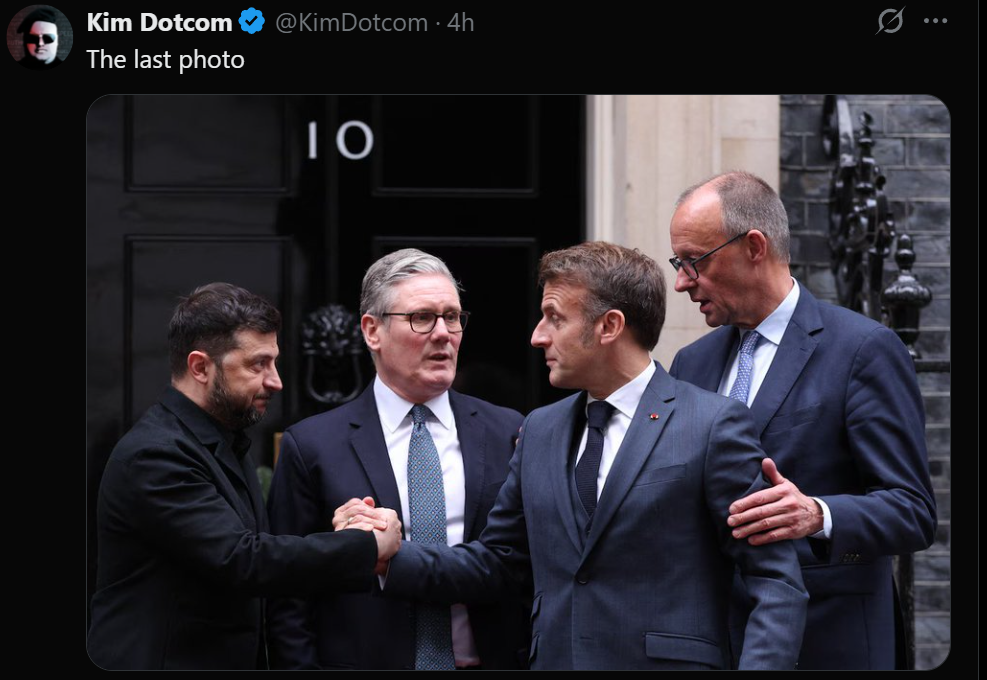
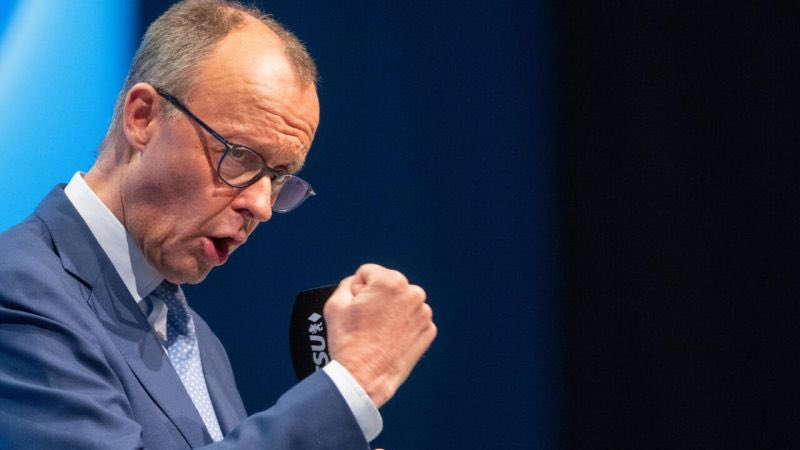
Friedrich Merz – Chancellor of Germany
(Dec 13, 2025 from the ISLANDER) Merz stood before his CDSU party and did two things in the same speech that should have stopped Europe cold.
He declared that “Pax Americana is over.” And he reached for Europe’s darkest memory… Munich, the Sudetenland, Hitler, to argue that Russia “won’t stop,” projecting expansionist intent onto Moscow while erasing the long trail of Western promises broken and red lines ignored.
Together, the lines function as one device: announce the old security arrangement is fading, then slam the door on compromise by turning diplomacy into a moral crime.
Of course it isn’t leadership. It’s a choreographed script, and everyone is expected to follow it.
“Pax Americana is over” is marketed as emancipation, Europe stepping out from under American guardianship, finally standing on its own feet. But the second half of Merz’s message tells you what this really is, not independence being offered to the public, but discipline demanded from it.
Because once Hitler is invoked, the field of legitimate diplomacy shrinks to a pinhole. Negotiation becomes appeasement. Restraint becomes cowardice. Doubt becomes disloyalty. History stops being a teacher and becomes a weapon, the kind you swing at your own citizens.
The Munich analogy is the most reusable instrument in European politics precisely because it abolishes alternatives. It does not illuminate the present, it pre-bans future choices. It declares in advance that off-ramps are immoral and escalation is virtue. This isn’t historical memory, but rather coercion by myth.
If Pax Americana were truly ending in a mature way, Europe’s response would look very different. It would begin with realism instead of hysteria, diplomacy instead of demonology, rebuilding industry, securing energy, restoring social consent, and cooling the temperature of a continent already exhausted by crisis.
Instead, Merz reaches for the most radioactive symbol available, because he does not trust the public to accept the costs of confrontation if those costs are explained honestly as tradeoffs rather than destiny.
That tells you everything.
For decades, Western Europe made a choice. It dissolved sovereignty into bureaucracy and outsourced strategic hard power to Washington. American protection became a political convenience, it allowed a managerial class to sermonize while someone else absorbed escalation risk, strategic liability, and blowback. Pax Americana was not just a shield, it was branded as a restraint on Europe’s own worst historical reflexes.
Now the umbrella is thinning and what’s being revealed underneath is not leadership, but dependency. A political class so long insulated from consequence that the moment protection fades, it reaches not for strategy, but for myth, coercion, and panic.
Merz doesn’t pivot to restraint. He pivots to moral absolutism.
This is where projection enters.
By invoking Hitler and the Sudetenland, Merz is not describing Russia so much as advertising elite panic, panic at the return of responsibility, panic at publics who might choose peace, panic at the dawning reality that American power is no longer an inexhaustible insurance policy.
Panic always produces the same politics: narrow the debate, raise the stakes, demand unity, punish dissent.
Germany is already entrenching long-term military posture on NATO’s eastern flank. At the same time, talk of mandatory service reappears when voluntary enthusiasm fails. These are not metaphors. They are signals. When persuasion runs dry, compulsion is prepared, and wrapped in moral language so it looks like virtue.
This is not fate. This is choice.
Germany is not being dragged into inevitability by history. It is choosing inevitability language because inevitability language disciplines the public. It converts policy into destiny. It turns citizens into assets. And it allows leaders to say “there was no alternative” after they have deliberately scorched every alternative.
That is why the Munich analogy is so dangerous. The real lesson of 1938 was never that compromise is evil. It was that moral panic and great-power games locked societies into trajectories they could no longer escape, while ordinary people paid the bill in blood, debt, and ruin. It was a warning about leaders who frame war as inevitability because they lack the courage, or the permission to negotiate peace.
Yet Merz flips that lesson backward. He turns “never again” into fuel for the very logic it was meant to restrain.
And here lies the central deception: the “end of Pax Americana” is being used not to reduce confrontation, but to internalize its costs. The Atlantic architecture remains. The sanctions machinery remains. The command habits remain. What changes is who pays, who bears the risk, and who is asked to sacrifice, while being told this is sovereignty.
That is not sovereignty. It is a higher subscription fee for a failing order, with penalties for cancellation.
The most revealing part is not what Merz says about Russia. It is what his rhetoric prepares at home, that of permanent emergency logic, narrowed speech, moralized obedience, and the normalization of coercion in the name of security.
This is how war cultures are built, sentence by sentence, until the public wakes up inside a cage and is told it’s a fortress.
Pax Americana may indeed be fading. Empires do not last forever.
But replacing it with historical hysteria, existential myth-making, and inevitability politics is not emancipation. It is Europe sleepwalking back toward its oldest nightmare, armed not with humility, but with borrowed myths and outsourced courage.
Real sovereignty would look like restraint. Real leadership would trust citizens with the truth. Real strength would refuse to turn memory into a weapon.
Merz’s speech was not a warning about the world.
It was a confession about Europe’s ruling class, what it fears, what it no longer knows how to do, and how readily it reaches for history when it has run out of truth.
The signal fire has been lit.
The only question left is whether Europeans recognize it for what it is — not a call to safety, but an invitation back into the machinery of fear, where history is no longer remembered to prevent catastrophe, but rewritten into a weapon.
Source: https://x.com/IslanderWORLD/status/2000071342117245168?s=20
THE ISLANDER | @IslanderWORLD
Geopolitics & Justice: Unveiling the untold, advocating for a Just Peace in the World.
@jarednolan – Support our work: http://ko-fi.com/theislandernews
Trump Just Declared War on the British Empire | Tom Luongo
Mel K w/ Matt Ehret |The International Intelligence Deception Post WW2