
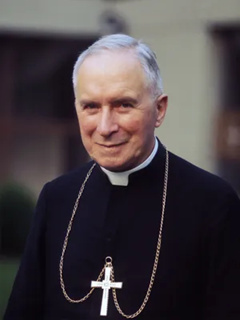
Founder of the Society of St. Pius X Archbishop Marcel Lefebvre, 1976.
How big is the Schism? In relative size, not that big, but is it important?
Has Rome been trapped in contradictions which can be traced all the way back to the Great Schism of 1054? Are the Roman Catholics reaping the rewards of Vatican I and Vatican II?
The Great Schism officially occurred on 16 July 1054, when Pope Leo IX’s legate, Cardinal Humbert, excommunicated Patriarch Michael I Cerularius of Constantinople, splitting Christianity into the Roman Catholic Church and the Eastern Orthodox Church. Although 1054 is the conventional date, the split was the culmination of centuries of growing tension, including disputes over the Filioque clause, papal authority, and liturgical practices. While the mutual excommunications were nullified in 1965 by Pope Paul VI and Ecumenical Patriarch Athenagoras I, full communion between the two churches has never been restored.
Vatican I was held from 1869 to 1870, while Vatican II took place from 1962 to 1965.
- Vatican I was convened by Pope Pius IX and formally defined the dogmas of papal infallibility and the primacy of papal jurisdiction.
- Vatican II was called by Pope John XXIII (and concluded by his successor, Pope Paul VI) as a pastoral council aimed at updating the Church’s practices and fostering dialogue with the modern world.
What will be the eventual impact?
The SSPX claims approximately 1,500 formal members, including 751 priests and 264 seminarians, with a global following estimated between 150,000 and 600,000 people. By contrast, There are an estimated 1.28 to 1.41 billion baptized Roman Catholics worldwide as of 2026.
What is SSPX?
The Society of Saint Pius X (SSPX) is a traditionalist Catholic organization founded in 1970 by Archbishop Marcel Lefebvre, known for celebrating the Traditional Latin Mass and opposing reforms from the Second Vatican Council. Following the unauthorized consecration of four new bishops on July 1, 2026, in defiance of Pope Leo XIV, the Vatican declared the society in schism and imposed automatic excommunication on its six bishops and any lay faithful who formally adhere to the group.
Key developments include:
* Current Status: The SSPX is now considered schismatic with invalid sacraments for confession and marriage, as previous faculties granted by Pope Francis were rescinded.
* Excommunication: The six bishops involved incurred ‘latae sententiae’ (automatic) excommunication under Canon Law for illicit episcopal consecrations.
* Faithful Warning: U.S. bishops and the Holy See urge Catholics not to attend SSPX Masses, labeling them an abuse of the Eucharist due to the lack of canonical jurisdiction.
* Reconciliation: The Vatican has stated that those wishing to return to full communion will be welcomed back, though the group remains in formal rupture with the Holy See.
SSPX Schism by Jay Dyer
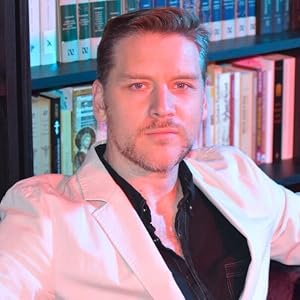
Jay Dyer (Orthodox Christian)
Rome, SSPX, Godlogic Zlonism & RELIGIOUS CHAOS!
Jay Dyer’s video “Rome, SSPX, Godlogic Zlonism & RELIGIOUS CHAOS!” (live-streamed July 3, 2026, on his YouTube channel) dedicates a substantial portion (roughly from ~10 minutes to over an hour) to the recent SSPX re-excommunications and their implications.
Dyer, an Eastern Orthodox Christian apologist, draws on his personal history as a former attendee of SSPX Latin Masses. He converted to Catholicism via RCIA around 2002–2003 and attended SSPX chapels for about 7–8 years (roughly until ~2007/2010). He was initially drawn by the contrast with Novus Ordo abuses (e.g., guitar or hip-hop Masses) and SSPX critiques of Vatican II. He left after theological disagreements (including over John Paul II’s canonization and Vatican II) and reports being asked to leave one chapel, with a priest (Fr. Gregory Post) threatening arrest if he returned.
Jay’s View on the SSPX
Dyer is sharply critical of the SSPX’s position, calling it inconsistent, hypocritical, and ultimately unsustainable. Key points include:
- Unauthorized bishop consecrations: The 1988 excommunications (under John Paul II via Ecclesia Dei) and recent re-excommunications stem from Archbishop Marcel Lefebvre consecrating bishops without papal approval. The SSPX justifies this via a claimed “state of emergency” or in extremis situation. Dyer rejects this as invalid and Protestant-like, arguing it directly contradicts Vatican I’s teaching on papal authority over discipline and government (clergy and faithful must submit to Rome not only in faith and morals but also in discipline and government). The Pope is supposed to affirm/confirm every bishop.
- Inconsistency with Vatican I and Catholic teaching: He has made this argument for nearly 20 years (since leaving the SSPX). The SSPX claims to submit to the Pope/Rome while rejecting key post-Vatican II developments and operating independently. This creates a contradiction: “Submit to Rome… and then Rome hates you and excommunicates you. You submit to Rome, you hypocrite.” Living with this daily contradiction is “a miserable life” with no peace.
- Rejection of Vatican II and ordinary magisterium: The SSPX rejects Vatican II, but Dyer argues Catholics are bound by the ordinary magisterium (not just ex cathedra definitions), citing sources like Denzinger entries (e.g., 1683, 1698, 1722, 1792, 1830) and Canon 752, which require religious submission to papal or episcopal teachings on faith and morals even when not infallible. Rejecting this selectively mirrors errors condemned as modernist.
- Other issues: He mentions internal SSPX scandals, divisions (some wanting fuller reconciliation with Rome), and that Rome has offered limited recognition (e.g., asking SSPX to affirm Vatican I but not fully committing to Vatican II), which he sees as insufficient or inconsistent on Rome’s part too.
Overall, Dyer portrays the SSPX as trapped in a schismatic or quasi-Protestant stance while claiming fidelity to Rome—proving the Roman system’s contradictions. Jay’s View on the Pope and Rome. Dyer views the modern papacy (post-Vatican II, including recent popes) and Rome as apostate and not the true Church. The SSPX’s troubles illustrate this broader “papal apostasy”:
- Vatican II and its aftermath represent a departure from traditional Catholicism (liturgical changes, religious liberty/indifferentism, etc.). Popes (e.g., Francis affirming Vatican II’s liturgy as “irreversible” and magisterial) bind Catholics to these changes.
- Rome excommunicates or marginalizes traditionalists (like the SSPX) while tolerating other errors or scandals, showing it “hates” traditionalists. “The Vatican is apostate. It’s not the true church.”
- There is no real solution within the Roman system; the papacy itself drives the problems and religious chaos.
Overall Opinion and Context
Jay uses the SSPX situation to argue that Roman Catholicism (especially post-Vatican II) is irreparably contradictory and apostate. The SSPX’s position exposes these flaws but offers no coherent alternative within Rome. He contrasts this with Eastern Orthodoxy’s consistency on tradition, authority, and unity—implicitly (and sometimes explicitly in his broader work) presenting Orthodoxy as the better path for those seeking traditional Christianity without the contradictions. The video also covers other topics (e.g., Godlogic’s background), but the SSPX/Pope section is a detailed, experience-based critique aimed at highlighting Roman Catholic issues from an Orthodox perspective. Dyer’s tone is polemical and direct, typical of his style as a debater and apologist. This summary is based on the video’s description, metadata, and available transcript segments/excerpts. The full stream is long (~2+ hours), with the core SSPX discussion spanning a significant block.
SSPX Schism by E. Michael Jones
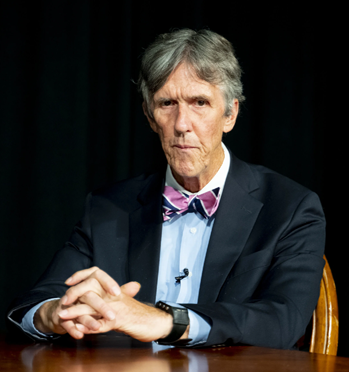
E. Michael Jones (Roman Catholic)
EMJ Live #176 • The Vatican Obliterates the SSPX • Dr. E. Michael Jones •🕞1h 9mins
- Michael Jones’ view on the SSPX, as presented in his July 3, 2026, episode “EMJ Live #176: The Vatican Obliterates the SSPX” (≈1 hour 9 minutes), centers on the claim that the SSPX is in schism. This stance aligns with Jones’ long-held position, most notably from his 1990s debate with the late Michael Davies (referenced in the episode’s outline via a linked debate video titled “Is the SSPX in Schism? Yes or No?”). In that debate, Jones argued affirmatively that the SSPX is in schism, while Davies defended it as not schismatic due to a “state of necessity.
Core Arguments from Jones
- Schism due to unauthorized bishop consecrations: Jones maintains that consecrating bishops without papal approval (as Archbishop Lefebvre did in 1988, and as the SSPX appears to have done or planned in the recent 2026 context) constitutes schism. He describes schism as gravely wrong—comparable in seriousness to abortion in one debate excerpt—and rejects “state of necessity” or emergency justifications as insufficient to override canonical requirements and papal authority.
- Rejection of SSPX’s independent stance: Even amid legitimate criticisms of post-Vatican II changes, modernism, or liturgical issues, Jones argues that one cannot justify breaking from Rome or operating in a parallel structure. Selective acceptance of magisterial teachings or defiance of papal directives on discipline (e.g., bishop appointments) places the group outside full communion.
- Recent Vatican actions as “obliterating” the SSPX: The episode title and timing (aired shortly after reports of SSPX consecrations despite papal appeals, followed by Vatican responses) indicate Jones views the Vatican’s measures—such as warnings, potential or actual excommunications, or demands for a profession of faith explicitly accepting the Second Vatican Council, the Mass of Paul VI (Novus Ordo), and papal authority—as a decisive and proper assertion of authority. He frames these actions as effectively resolving or “obliterating” the SSPX’s irregular/schismatic status by forcing a clear choice: full submission or canonical consequences.
Broader Context in Jones’ Thought
Jones is a traditional Catholic critic of modernism, Vatican II’s implementation, and cultural/religious liberalism. However, he consistently prioritizes obedience to legitimate ecclesiastical authority and rejects schism or sedevacantism as solutions to the Church’s crises. In this episode, he likely applies this framework to current events, using the Vatican’s response to underscore that the SSPX’s path confirms schism rather than preserving tradition legitimately. The show includes standard EMJ Live elements (intro, outro with his written works, quotes, and cultural commentary), but the SSPX discussion revolves around the debate reference and the implications of recent Vatican-SSPX developments. In short, Jones sees the SSPX as schismatic for defying papal authority on key disciplinary matters, and he portrays the Vatican’s recent actions as a necessary and effective step to address that schism—hence the provocative title “The Vatican Obliterates the SSPX.” This contrasts with defenders of the SSPX who invoke necessity or view the group as operating within a broader crisis in the Church.
Compare and Contrast
Jay Dyer and E. Michael Jones both address the same recent events (the SSPX’s 2026 bishop consecrations despite papal appeals, followed by Vatican responses such as warnings, excommunications, or demands for a profession of faith accepting Vatican II, the Novus Ordo, and papal authority). They share some surface-level critiques but diverge sharply in their fundamental ecclesiology, conclusions about the SSPX, and proposed paths forward.
Similarities (Points of Agreement)
- Criticism of SSPX’s canonical actions: Both view the SSPX’s unauthorized bishop consecrations (1988 under Lefebvre and the recent ones) as problematic violations of papal authority, specifically Vatican I’s requirements on discipline and government. They reject the SSPX’s “state of emergency/necessity” justification as insufficient.
- Acknowledgment of Church crisis: Both recognize serious issues in post-Vatican II Catholicism (liturgical changes, modernism, etc.) and reference the 1988 excommunications as a key precedent.
- Focus on authority and consistency: Both highlight contradictions or inconsistencies in the SSPX’s position—claiming some form of fidelity to Rome while operating independently and rejecting key teachings.
- Timing and context: Their July 3, 2026 videos respond directly to the same news cycle involving Pope Leo XIV’s appeals and Vatican actions against the SSPX.
Key Differences (Points of Contrast)On the SSPX itself
- Jay Dyer: Sees the SSPX as hypocritical and trapped in a miserable contradiction. They claim submission to the Pope/Rome but are excommunicated and reject Vatican II/ordinary magisterium (citing Canon 752 and Denzinger). This makes them “like Protestants.” He draws on personal experience attending SSPX Latin Masses for 7–8 years (~2003 onward) before leaving amid conflicts (including threats of arrest over canonization issues). He mentions internal scandals and divisions but frames the SSPX’s problems as symptoms of Rome’s deeper failures rather than solely the SSPX’s fault.
- E. Michael Jones: Views the SSPX as objectively in schism. He has held this position since at least the 1990s (explicitly referenced via his debate with Michael Davies, where Jones argued “Yes, the SSPX is in schism”). Unauthorized consecrations violate Church law and papal authority; “state of necessity” does not excuse it. Schism is gravely wrong (he has compared it in seriousness to abortion in debate excerpts). He sees the SSPX’s defiance as confirming schism rather than a legitimate response to crisis.
On the Pope, Vatican, and Rome
- Jay Dyer: Extremely negative. Post-Vatican II Rome (including recent popes) is apostate and “not the true Church.” Vatican II promotes errors (e.g., indifferentism, irreversible liturgical changes). The Vatican “hates” traditionalists, excommunicates them while tolerating other problems, and has no solution. SSPX troubles prove Rome’s apostasy. He links this to broader “religious chaos.”
- E. Michael Jones: More affirmative of recent Vatican actions. He portrays the Vatican’s response (excommunications, demands to accept Vatican II/Novus Ordo/papal authority) as “obliterating” the SSPX—a decisive, proper exercise of authority that resolves the group’s irregular status. While critical of modernism and Vatican II’s implementation, Jones upholds papal authority and rejects schism. He does not call Rome apostate.
On Solutions and Broader Ecclesiology
- Jay Dyer (Eastern Orthodox): The SSPX’s contradictions expose the fatal flaws of Roman Catholicism itself. There is no fix within Rome—Vatican II and subsequent developments have led to apostasy. The consistent path for traditional Christianity is Eastern Orthodoxy, which avoids these contradictions of authority and magisterium.
- E. Michael Jones (Traditional Catholic): The solution lies in submission to legitimate papal authority. The SSPX should accept the Vatican’s terms or face the canonical consequences of schism. Upholding unity under Rome takes precedence over independent traditionalist structures, even amid legitimate grievances about the post-Vatican II Church. Jones remains firmly within Roman Catholicism.
Summary of the Contrast
Jay Dyer uses the SSPX situation as evidence against Roman Catholicism as a whole, leveraging his personal history in the group and his Orthodox perspective to argue for leaving Rome entirely. E. Michael Jones treats the SSPX as a schismatic problem within Catholicism that the Vatican is rightly correcting through authority, consistent with his long-standing theological position (e.g., the Davies debate) and his commitment to Roman ecclesiology. In essence:
- Jay sees both the SSPX and Rome as broken, with Orthodoxy as the answer.
- Jones sees the SSPX as broken (schismatic) and the recent Vatican response as a needed corrective within a still-valid Roman framework.
Their backgrounds explain much of the divergence: Jay as an Orthodox convert/critic of Rome versus Jones as a traditionalist Catholic defender of papal authority against schism. Both videos reflect the heated 2026 debates over SSPX consecrations but arrive at opposing prescriptions.