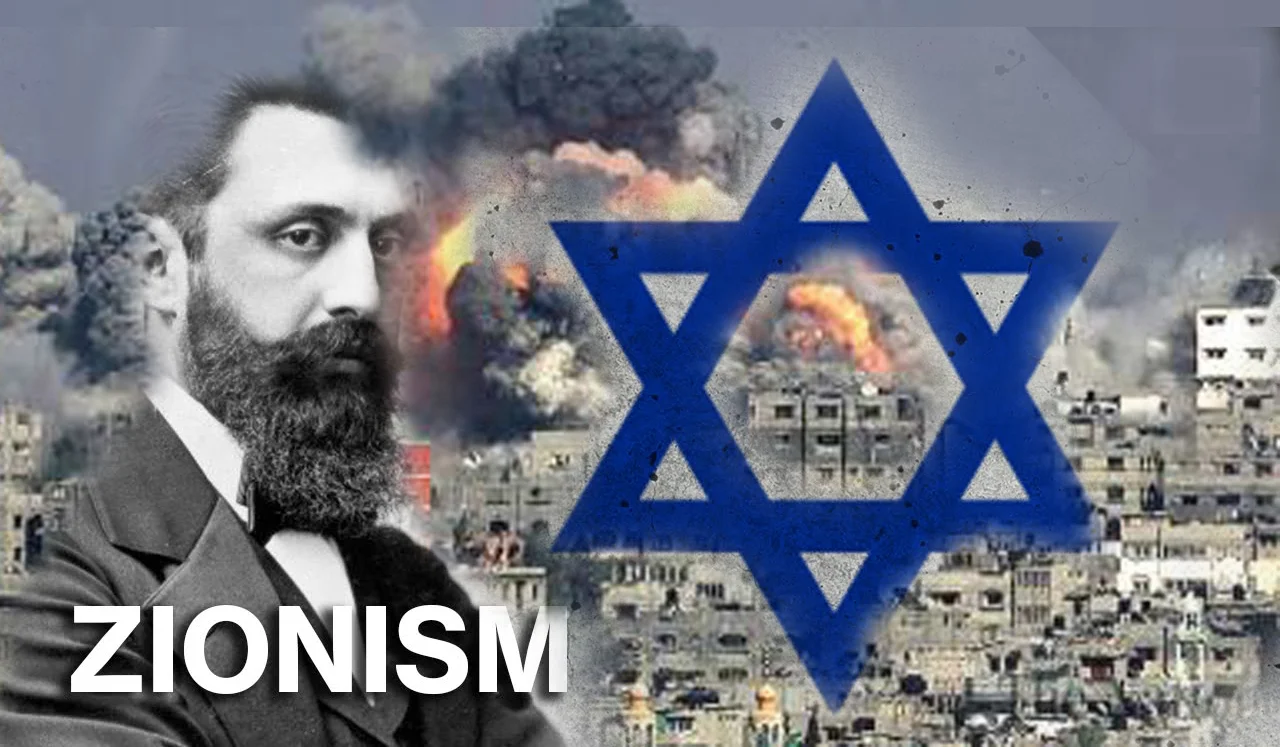
Wikipedia: Theodor Herzl was the founder of the modern Zionist movement. In his 1896 pamphlet Der Judenstaat, he envisioned the founding of a future independent Jewish state during the 20th century.
Backgrounder from Jay Dyer and Richard Grove: Spies, Lies & The Middle East: Richard Grove on The Jay Dyer Show
Creation of Christian Zionism:
- Tim Kelly & James Perloff: TIM KELLY AND JAMES PERLOFF ON CHRISTIAN ZIONISM AND A NEW WORLD RELIGION
- Ron Paul on X: Pastor Chuck Baldwin on Breaking Free From The Bondage of “Christian Zionism”
Official narrative promulgated by Wikipedia: Zionism
Professor Avi Shlaim reveals the Israeli apartheid plot to drive Iraqi Jews into occupied Palestine.
Not their first rodeo …
“During the reign of the Greek Emperor Heraclius, the Persian Emperor Chozroes attacked Jerusalem in the year 614 A.D. Chozroes pillaged the city, removed the Honorable Cross [of Christ] to Persia and took an enormous number of Christians into bondage, among them was Patriarch Zacharias. The Jews assisted Chozroes in committing evil against the Christians. Among the other Jewish wickedness, this one is mentioned: the Jews purchased from Chozroes 90,000 Christians as their slaves and slew them all.” – The Prologue of Ohrid (Feb 21) Jerusalem Holocaust 614: An Untold Chapter of History
The Rothschilds…
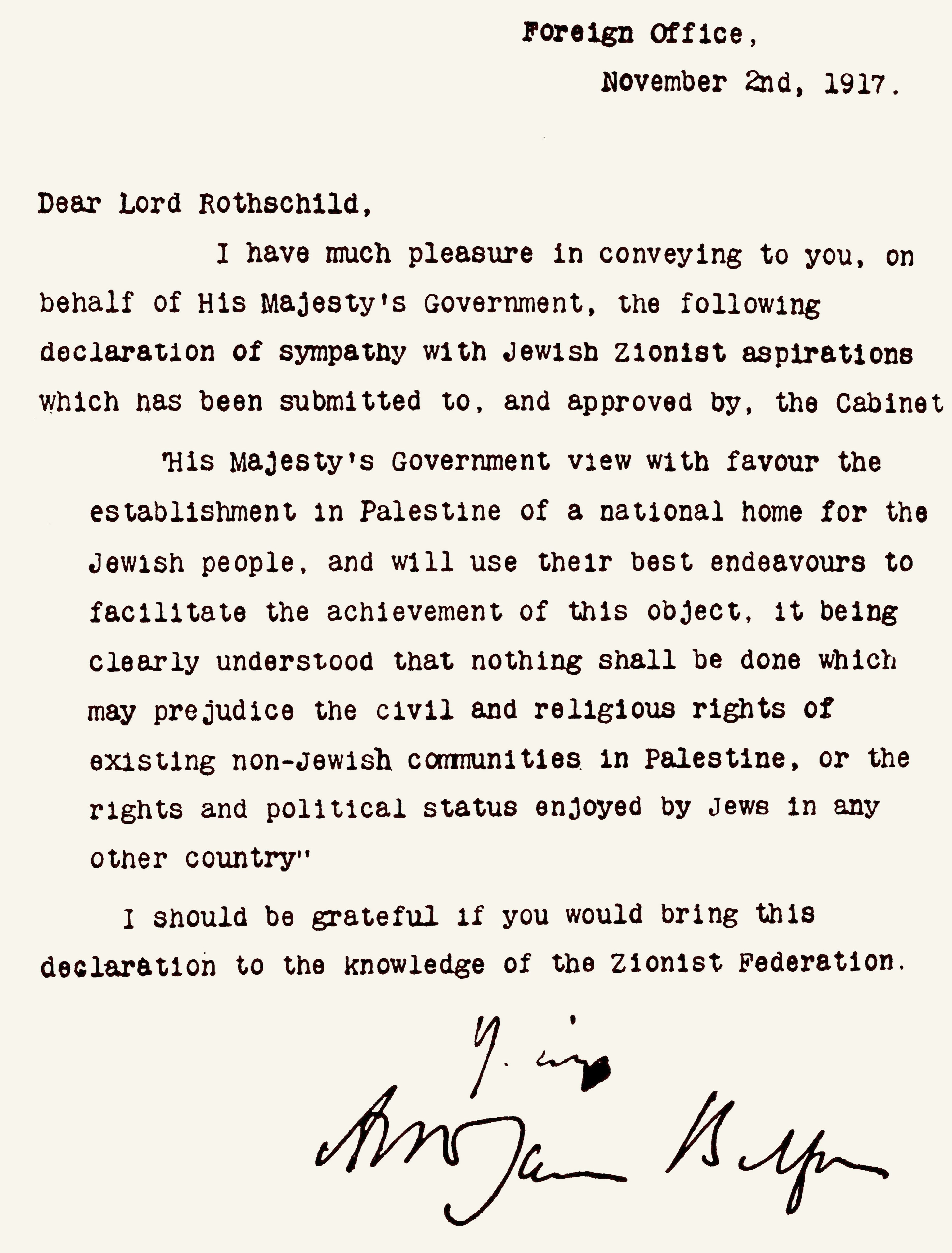
The Balfour Declaration (1917)
Grok: Baron Edmond de Rothschild played a significant role in supporting Jewish relocation to Palestine during the late 19th and early 20th centuries. A member of the wealthy Rothschild banking family, he was a key philanthropist who provided financial and logistical support to early Zionist settlements, particularly during the First Aliyah (1882–1903). Here’s a concise overview:Financial Support for Settlements: Rothschild funded the establishment and sustenance of early Jewish agricultural colonies in Palestine, such as Rishon LeZion (1882), Zichron Ya’akov (1882), and Petah Tikva. He provided money for land purchases, infrastructure, and farming equipment, helping these communities survive their challenging early years.
Administrative Oversight: Rothschild sent administrators to manage the settlements he supported, ensuring efficient use of funds and resources. His involvement was hands-on, earning him the nickname “HaNadiv HaYadua” (the Known Benefactor) among Jewish settlers.
Economic Development: He introduced modern agricultural techniques, such as vineyards and wineries (e.g., Carmel Winery), to make settlements economically viable. This created jobs and attracted more Jewish immigrants seeking sustainable livelihoods.
Scale of Contribution: By the early 20th century, Rothschild is estimated to have invested millions of francs (exact figures vary, but roughly equivalent to tens of millions in modern USD) in Palestinian settlements. His support helped sustain around 20 settlements, housing thousands of Jewish immigrants, primarily from Eastern Europe.
Zionist Alignment: While not formally part of the Zionist movement initially, Rothschild’s actions aligned with its goals. He later collaborated with Zionist organizations, and his efforts laid groundwork for the Jewish National Fund’s land acquisition strategies.
The Haavara Agreement was a 1933 pact between Nazi Germany and Zionist organizations, primarily the Jewish Agency in Palestine, to facilitate the emigration of German Jews to British Mandatory Palestine while preserving some of their wealth. Signed on August 25, 1933, it was a response to the economic boycott of Germany by Jewish groups protesting Nazi anti-Semitism. The agreement allowed Jews to transfer a portion of their assets to Palestine, but only indirectly, through the purchase of German goods exported to Palestine, which were then sold to recover funds.
More context…
Powers & Principalities: Episode 420 by Our Interesting Times. Tim Kelly and Joe Atwill are co-hosts of the “Powers and Principalities” segment on the podcast “Our Interesting Times”.
Israel’s Coordinated Campaign to Propagandize Conservatives in America