Tom Luongo interviews Alex Krainer: In this fascinating podcast, Alex pieces together a timeline which may explain how many of the recent global events are related, and why Ukraine is so darned important to the Collective West — It’s not what I thought. Alex also identifies some of the great opportunities impending financial disruptions may provide for those with eyes wide open.
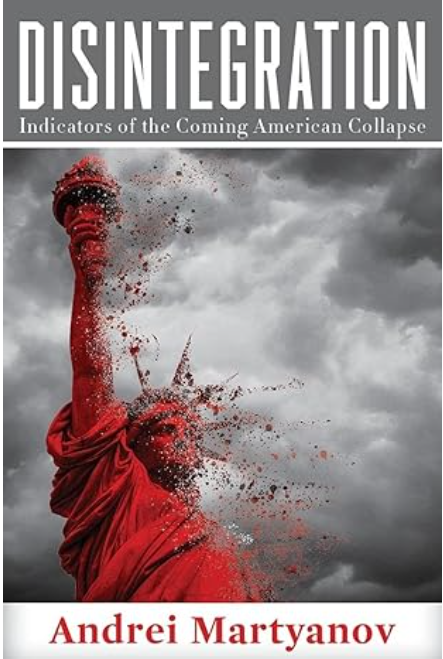
Disintegration | Indicators of the Coming American Collapse by Andrei Martyanov
Published: 2021 by Clarity Press, Inc. (236 pages).
Andrei Martyanov is a former laboratory director in a commercial aerospace group. He is a frequent blogger on the US Naval Institute blog, and author of ‘Losing Military Supremacy: the Myopia of American Strategic Planning and The (Real) Revolution in Military Affairs.
Comments
Disintegration brings to the table many causative inputs missed during my second look at history using the corrective lenses provided by the likes of Antony C. Sutton, Quigley, Engdahl, and others. This book was written after the US-orchestrated Ukrainian putsch in 2014 but before Russia’s SMO, so represents a snapshot of that time (2021) on the condition of America internally and externally. The trajectory of destruction is well referenced and documented with many footnotes. Since 2021, this self-inflicted death spin of corruption, incompetence and information manipulation has only gotten worse. This is not just another depressing book designed to list the many failures of America, this book brings new insight and evidence of the primary causes that put this great country on the path of disintegration. –ClearNFO
“Martyanov shows that America’s disintegration is irreversible because the ruling elites are an organic part of the calamitous sources of dysfunction that have destroyed the country.” –PAUL CRAIG ROBERTS
“Andrei Martyanov’s third book discussing the collapse of the U.S. Empire looks into the social and economic phenomena which all contribute to that collapse. Disintegration is a multi-level analysis of the crisis which is now so clearly plaguing the USA of 2021. I consider Disintegration a “must read” for every U.S. patriot who wants his country to overcome its current difficulties and for every person on the planet who wants to avoid a full-scale war between Russia and/or China and the USA. Indeed, if you want to get a superb summation of what is really going on in the United States—read all of Martyanov’s books.” –THE VINEYARD SAKER
You can find Andrei’s informative podcasts and interviews on many popular platforms, including Rokfin, BitChute, Rumble, Odysee, YouTube and many more.
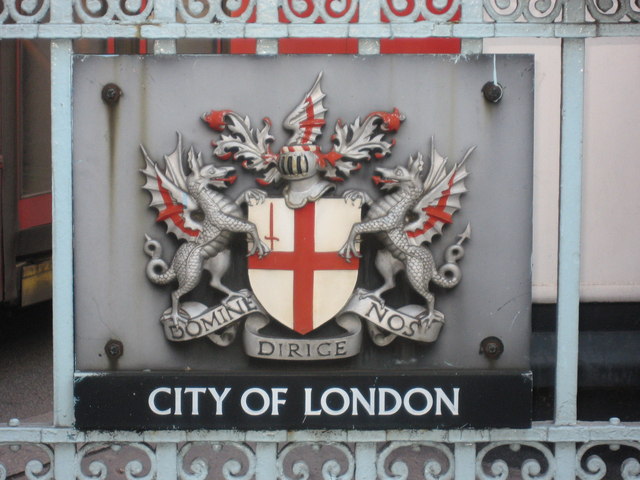
City of London coat of arms on the street | Domine Dirige Nos “Lord Direct Us”. On a public toilet near Monument tube station. | By Mike Quinn, CC BY-SA 2.0, https://commons.wikimedia.org/w/index.php?curid=13822404
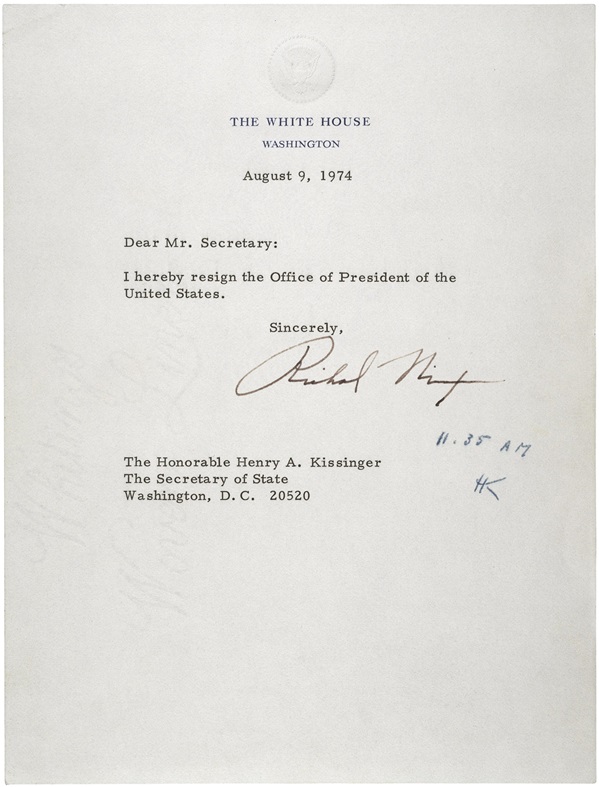
The True Story of The Bilderberg Group. The North American Union Edition by Daniel Estulin. Published 2009. Chapter Seven: Watergate Con Game pages 55 – 60
Tucker Carlson explains how the FBI and CIA conducted a coup to take out President Richard Nixon with help from journalist Bob Woodward.
“Richard Nixon was taken out by the FBI and CIA, and with the help of Bob Woodward.”
“[Woodward] was that guy. And who is his main source for Watergate? Oh, the number two guy at the FBI. Oh, so you have the naval intelligence officer working with the FBI official to destroy the president. Okay. So that’s a deep state coup.”
“Richard Nixon was elected by more votes than any president in American history in the 1972 election.”
“The most popular president in his reelection campaign, and two years later, he’s gone, undone by a naval intel officer, the number two guy at the FBI and a bunch of CIA employees.”
“You tell me what that is. Those are the facts. Those are not disputed facts.”
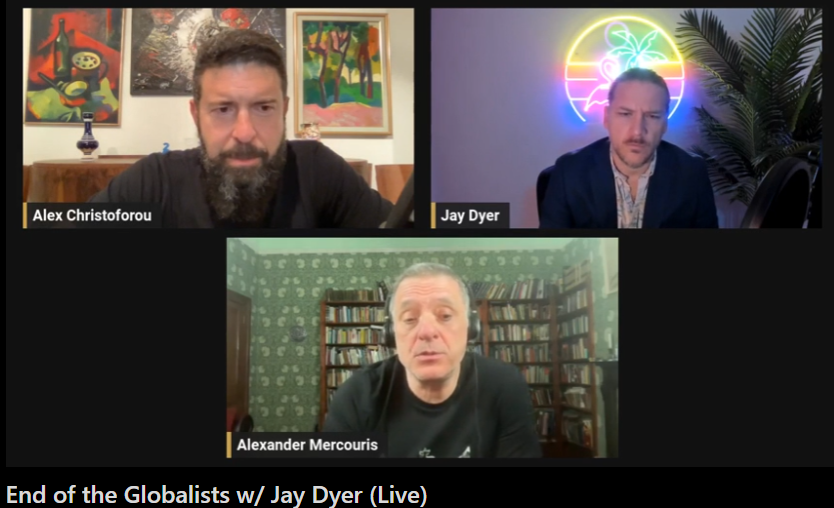
Alex Christoforou, Alexander Mercouris and Jay Dyer get together to discuss The Anglo-American Establishment, Carroll Quigley, Operation Gladio and the current geopolitical predicament the West finds itself in… plus more. Interesting, informed discussion. -db
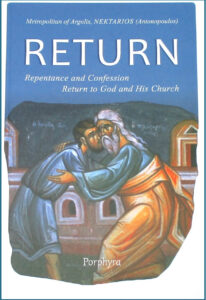
RETURN | Repentance and Confession: Return to God and His Church
Best book I’ve found on this topic. Answered all my questions on the Orthodox Confession: especially for those –like me– who are new to Orthodoxy. Coming from a Protestant background, the idea of confession seemed strange, unnatural, unnecessary and even scary… but this little 86 page book explained it all to me in terms I could understand.
‘Return’ is a great title for this little book… a RETURN to God and His Church through the process of repentance and confession. This is what confession on a regular basis does… it helps you return to the path when you stray off into the weeds.
Back Cover:
What is sin and which are sin’s fruits?
What is repentance and what isn’t it?
How do we prepare for confession?
How do we confess?
What is the meaning of penance?
What is the relationship of repentance with the mystery of the Divine Eucharist?
This small book, in simple words attempts to answer these as well as other questions and helps to offer a RETURN back to the original attitude and to a correct approach to the great and philanthropic mystery of repentance and confession.
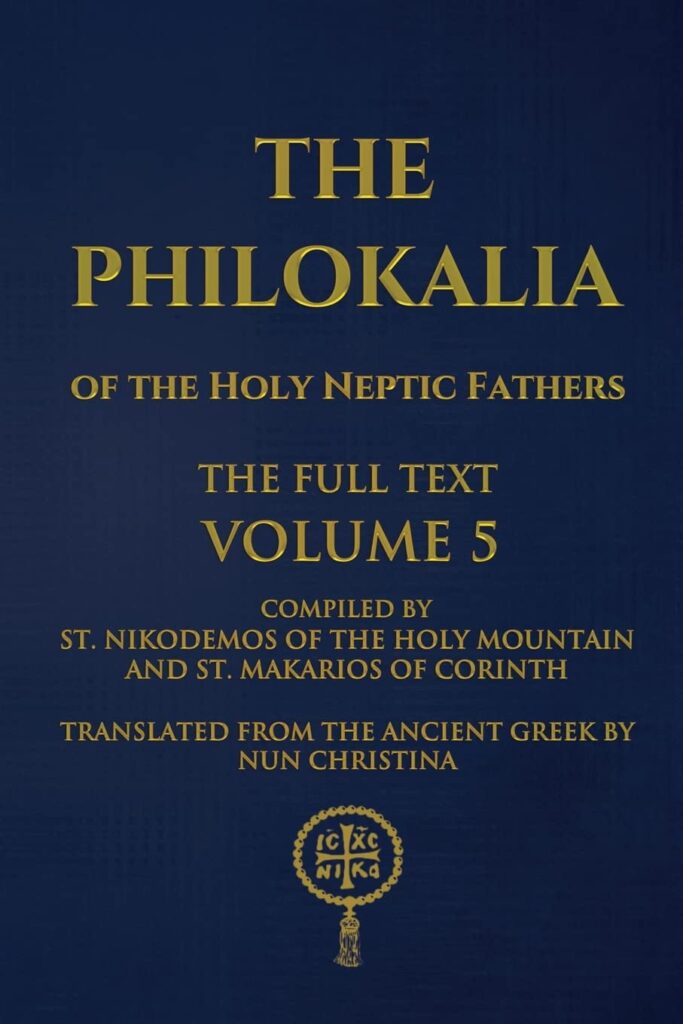
The Philokalia provides a wealth of wisdom and deep insights which I enjoy daily. This five (5) volume set addresses many questions I have and explores with great care and insight topics that deepen my understanding of the human condition and Christian Orthodoxy. Daily reading of these important writings have helped clear the debris that clouds my nous (eye of the soul). I read volume five first and then jumped to volume one.
As a former artist, it became obvious early on how much easier it was to create amazing monsters and how much more difficult it was to create something truly beautiful and wholesome. I believe this fundamental theorem resonates with much of my life to date. Creating monsters is easy and productive, yet this road does not lead to beauty. Believing I could control my life by my own personal will, intellect and talent would lead to a beautiful, satisfying life proved to be folly. As it has turned out –while I accomplished many personal and financial successes—my self-directed control, fortitude and personal management proved to be in error exposing the limits of my man-made rationalism, reasoning and abstract concepts. My nous had become clouded and I was unable to receive the full energy emanating from God which I once knew and experienced as a child. Reading the Philokalia helped clear my nous and return me to the experience and the eternal wisdom provided by the Father, the Son and the Holy Spirit. -db
From the 5th Volume: The Philokalia, which means “the love of the good and beautiful”, was compiled by St. Nikodemos of the Holy Mountain and St. Makarios of Corinth and first published in Greek in 1782 as an anthology of classic spiritual texts ranging from the 4th and the 15th century. Its rich assortment of edifying literature provides boundless wisdom and guidance regarding prayer, the soul’s ascent to God through grace by its natural “love for beauty”, and its struggle to overcome its own passions and fragmentation.
Orthodox Wiki: The Philokalia is a collection of writings, mostly centering on practicing the virtues and spiritual living in a monastery. In recent decades it has become an important resource for Orthodox Christians, laity and clergy alike, in personal living and in some ways has achieved status as a major secondary spiritual written resource (after the primary one, Holy Scripture) along with St. John Climacus‘ The Ladder of Divine Ascent.
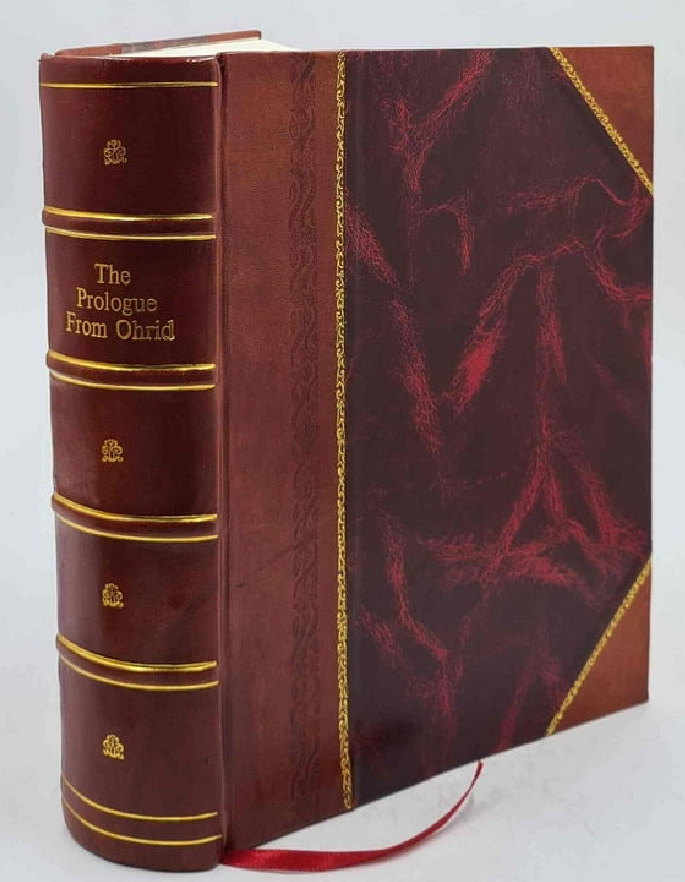
The Prologue of Ohrid: Lives of Saints, Hymns, Reflections, and Homilies for Every Day of the Year
A great addition to my library and daily studies: I can’t wait to get up every morning to read The Prologue from Ohrid. Truly a fascinating book providing much wisdom, historical context and analysis on the lives of the Saints. A simple and quick two page read each morning and then I’m off to reading the Philokalia and other books of great wisdom.
Daily Format of the Ohrid:
Date (day of the year)
Brief biography of two or more Saints of the day
Hymn of Praise for the above Saint(s)
Reflection on the life of the Saint(s) of the day
Contemplation
Homily
I find it Interesting to compare The Prologue from Ohrid to the much condensed A Daily Calendar of Saints by Fr. Lawrence Farley. The Prologue provides additional historical depth and context expanding my understanding of the life of our Orthodox Saints, plus the ‘Reflections’ and ‘Homily’ sections are pure gold. After only four months reading The Prologue daily, I feel I have gained a rich understanding of the lives of the Saints, the evil they faced and the historical times in which they lived and died. -db
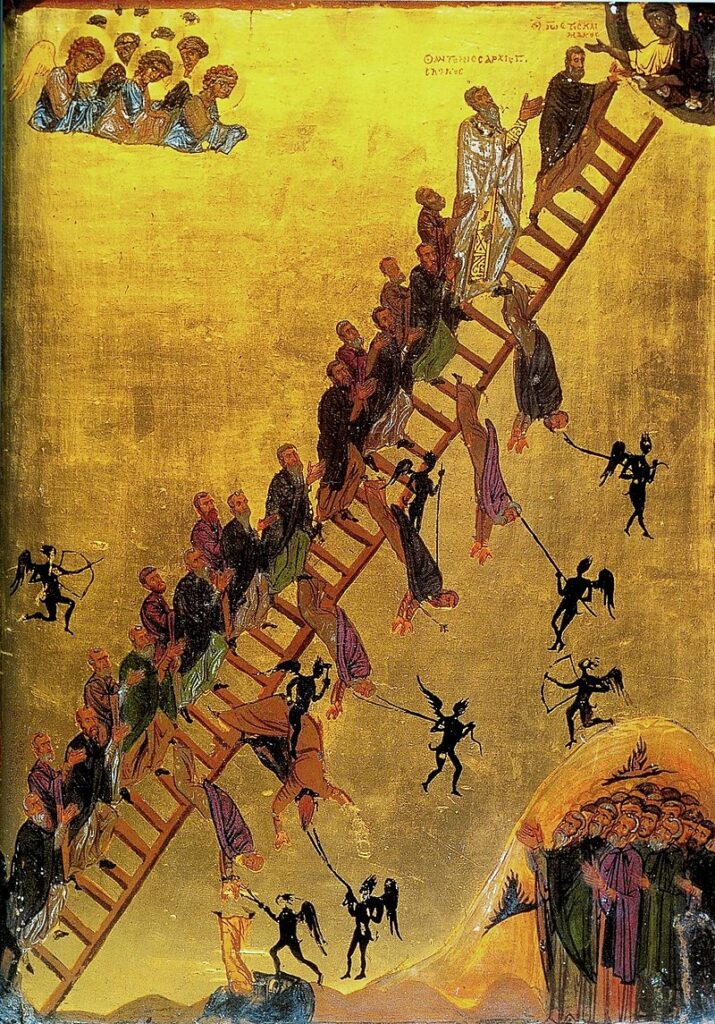
The Ladder of Divine Ascent | by St. John Climacus (579 – 649) died ~age 70; born in Syria
The Ladder of Divine Ascent
Step 1: On Renunciation of the world (7) Step 2: On detachment (12) Step 3: On exile of pilgrimage (14) – Concerning dreams that beginners have (17) Step 4: On blessed and ever-memorable obedience (18) – About a robber who repented (20) – About Isidore (23) – About Laurence (24) – About a bursar (24) – About Abbacyrus (25) – About Macedonius the archdeacon (26) – About a certain other brother (27) – About Saint Menas (27) – The first snare (31) – The second snare (32) – About Saint Acacius (37) – About John the Sabbaite, or Antiochus (38) Step 5: On painstaking and true repentance which constitute the life of the holy convicts; and about prison. (41) Step 6: On remembrance of death. (49) Step 7: On mourning which causes joy. (52) Step 8: On freedom from anger and on meekness. (59) Step 9: On remembrance of wrongs. (63) Step 10: On slander or calumny. (65) Step 11: On talkativeness and silence. (67) Step 12: On lying. (68) Step 13: On despondency. (69) Step 14: On the clamorous, yet wicked master – the stomach. (70) Step 15: On incorruptible purity and chastity to which the corruptible attain by toil and sweat. (74) Step 16: On love of money or avarice. (85) Step 17: On poverty that hastens heavenwards (86) Step 18: On insensibility, that is, deadening of the soul and the death of the mind before the death of the body. (87) Step 19: On sleep, prayer, and psalm-singing in chapel. (89) Step 20: On the bodily vigil and how to use it to attain spiritual vigil and how to practice it. (90) Step 21: On unmanly and puerile cowardice. (91) Step 22: On the many forms of vainglory. (93) Step 23: On mad pride, and, in the same Step, on unclean blasphemous thoughts (97) – – Concerning unmentionable blasphemous thoughts (100) Step 24: On meekness, simplicity, guilelessness which come not from nature but from habit, and about malice. (102) Step 25: On the destroyer of the passions, most sublime humility, which is rooted in spiritual feeling. (104) Step 26: On discernment of thoughts, passions and virtues. (112) – On expert discernment (123) Brief summary of all the previous steps (132) Step 27: On holy solitude of body and soul. (136) – Different aspects of solitude and how to distinguish them (139) Step 28: On holy and blessed prayer, mother of virtues, and on the attitude of mind and body in prayer. (145) Step 29: Concerning heaven on earth, or godlike dispassion and perfection, and the resurrection of the soul before the general resurrection. (151) Step 30: Concerning the linking together of the supreme trinity among the virtues. (153) A BRIEF EXHORTATION SUMMARIZING ALL THAT HAS BEEN SAID AT LENGTH IN THIS BOOK (157)