Mel K and The Duran (Jul 19, 2026) Secret 1944-1954 Architecture That Still Rules Us Today w/ Mel K
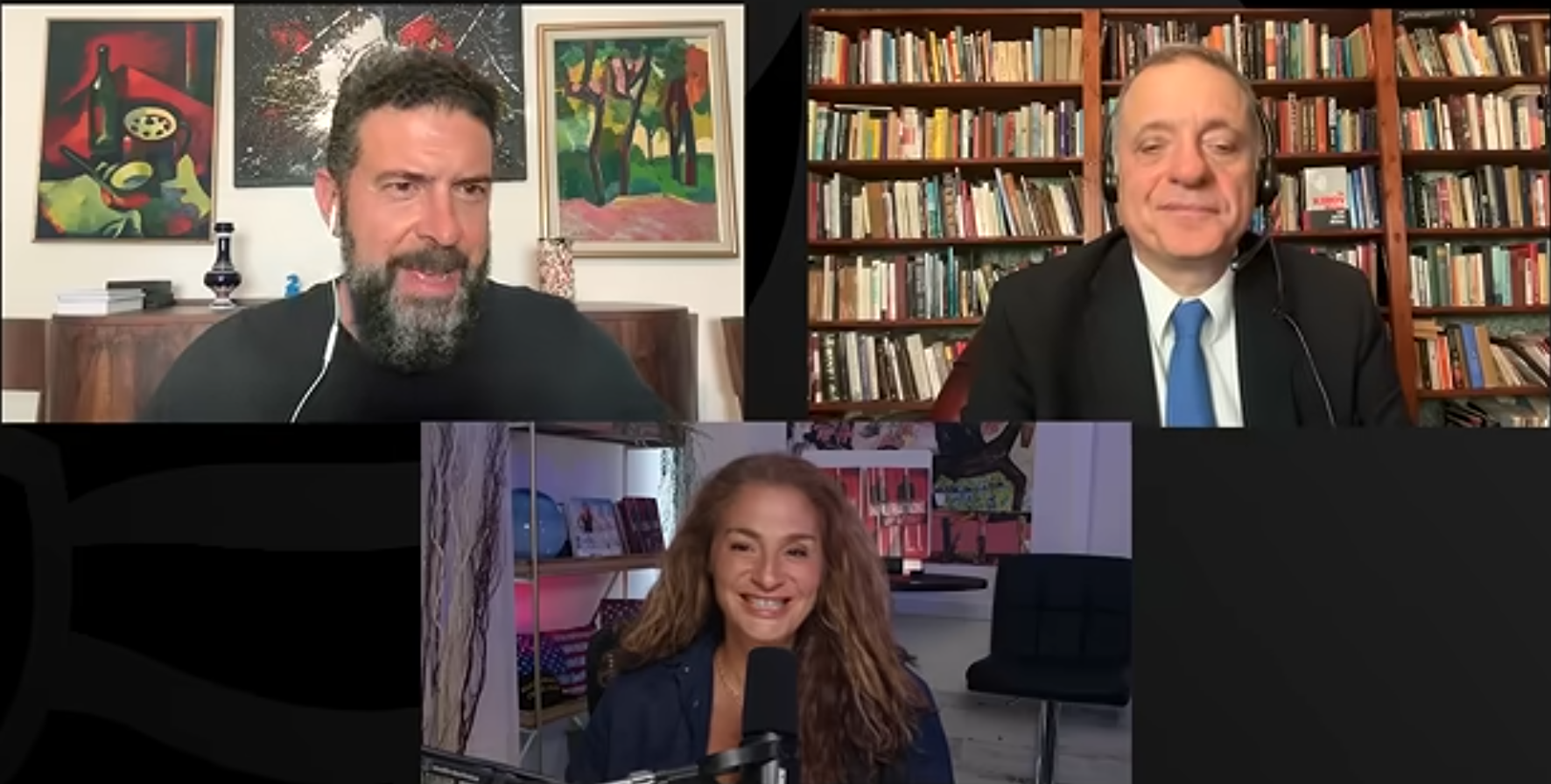
“Secret 1944-1954 Architecture That Still Rules Us Today w/ Mel K (Live)” (The Duran, interview with Mel K)
This live interview on The Duran features hosts Alexander Mercouris and Alex Christoforou discussing Mel K’s book Infiltration Instead of Invasion: America Betrayed, 1944–1954 (available via themelkshow.com, which includes her full bibliography and sourced documents). Mel K frames the decade immediately following World War II as the pivotal period when a hidden “supranational architecture” of power was constructed—one that prioritizes global banking and elite interests over national sovereignty and continues to shape geopolitics, finance, intelligence, and U.S. policy today.
Central Thesis
While the American public celebrated victory in WWII and enjoyed a period of unprecedented U.S. dominance (nuclear monopoly, ~60% of global manufacturing, vast gold reserves, technological lead, and high living standards), a small network of Wall Street lawyers, bankers, and operatives was embedding structures that would erode that sovereignty from within. Mel K decodes JFK’s April 1961 speech to the press—warning of a “monolithic and ruthless conspiracy” involving infiltration rather than invasion, subversion rather than elections, and guerrillas by night rather than armies by day—not merely as anti-communism, but as a reference to an entrenched system of endless war-for-profit and elite control built on pre-WWII foundations (e.g., the Bank for International Settlements/BIS).
This architecture allegedly provides continuity above presidents, nations, and electorates, funded largely by U.S. taxpayers, and was later “turned on” the United States itself around 2016.
Key Historical Pillars (1944–1954)
- 1944 Bretton Woods Conference: Established the IMF and World Bank. It created a dollar-centric global financial system (currencies pegged to the dollar, dollar to gold at the time), leveraging U.S. economic supremacy for supranational ends. This prefigured the full shift to fiat currency in 1971 and shifted the Federal Reserve’s role toward global rather than purely domestic priorities. The BIS survived despite plans for its dissolution.
- 1945 International Organizations Immunities Act: Granted sweeping legal immunity (no audits, investigations, or U.S. jurisdiction) to the BIS and connected banks (including IMF/World Bank), as well as the UN and related entities. Mel K highlights this as a foundational shield for the emerging global public-private partnership.
- 1947 National Security Act: Created the CIA (and laid groundwork for the NSA and Five Eyes intelligence alliance). Presented not primarily as a defender of American interests but as an international apparatus protecting banking cartels and enabling perpetual conflict, often in coordination with MI6.
- Dulles Brothers’ Ascendancy (1953): John Foster Dulles (Secretary of State) and Allen Dulles (CIA Director), both from the Wall Street law firm Sullivan & Cromwell (pioneers of multinational corporate models). They had spent years in Switzerland during WWII forging ties among the Bank of England, Reichsbank, City of London banks, and other players. Their rise consolidated the architecture.
- Other Elements: NATO’s founding (1949, with the purported goal of “keeping the Russians out, the Germans down, and the Americans in”); Operation Paperclip (integrating Nazi scientists and intelligence figures into U.S. institutions); documented meetings (e.g., Red House in Strasbourg involving bankers and Nazi figures for asset laundering/continuity); and the integration of certain ex-Nazi elements into Western structures (e.g., in West Germany and U.S. programs).
Mel K emphasizes primary documents, declassified materials, and the continuity of personnel and institutions from the WWII era (including dealings with Axis financial elements) into the Cold War framework.
Modern Implications and “Playbook”
Mel K argues this same architecture—centered on intelligence opacity, financial leverage, legal immunities, NGOs, and a global public-private partnership (involving Wall Street, Brussels/Geneva institutions, City of London, etc.)—was deployed domestically in the U.S. starting around 2016. It manifests in endless conflicts (Cold War, War on Terror, etc.), surveillance, regime-change operations, and efforts toward supranational governance. Historical opposition (e.g., Senator Robert Taft’s isolationism, Eisenhower’s military-industrial complex warning, Truman’s later critique of the CIA) was marginalized.
The interview stresses public education, access to original documents (via Mel K’s site), and citizen awareness as paths to restoring sovereignty.
Mel’s new book: INFILTRATION INSTEAD OF INVASION. America Betrayed, 1944–1954. https://themelkshow.com/ and also on Amazon
Follow Mel K:
- https://x.com/melkshow
- https://rumble.com/c/TheMelKShow
- https://melk.locals.com/ – https://linktr.ee/themelkshow
Timestamps:
- 00:00:00 Introduction and Mel K’s new book
- 00:00:53 The key decade that shaped modern America
- 00:02:48 JFK’s 1961 speech decoded
- 00:06:44 Dulles brothers seize power in 1953
- 00:07:37 Bretton Woods and the 1944 financial architecture
- 00:10:04 The 1947 Act creates the CIA and NSA
- 00:13:41 CIA secrecy and Cold War preparations
- 00:19:09 NATO’s founding and hidden purpose
- 00:20:31 Taft and the isolationist pushback
- 00:24:40 The same playbook turned on America in 2016
Transcript